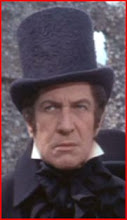
Lisa and the Devil takes place almost exclusively in a house in Spain -- the location and time are never quite sure, nor are we certain these properties even exist within the mansion. Except for one, all the characters inside the mansion gradually come to terms with the fact that they will never leave, and gradually become just another of the house's faded memories. As a viewer, I began to feel the same enchanted qualities as the characters on screen, with little idea about my surroundings and certain that almost anything could lurk behind the next door. Lisa and the Devil is one of those rare movies (like Playtime, Nashville or even Rio Bravo) where you stop watching it to follow the story and start to soak up the atmosphere and characters as if you were one of them.
Lisa and the Devil is Mario Bava's most magical movie, but it also carries one of the cruelest of legacies. The director was given carte blanche privileges and a matching budget by producer Alfredo Leone (the duo's second collaboration, after Baron Blood), for the first time in his career he was able to make a film limited only by his imagination. With these expansive resources, Bava was able to assemble a quality cast and create a horror film without the shocking exploits or contrived plots of his previous efforts. While those films were brought to unforeseen heights by Bava's creative style, Lisa and the Devil would be his from the beginning -- and his high-art visuals would be matched with a story of subtle, morbid mystery. But this resulted in a commercially inviable product, which was shelved and later re-cut with new material and released as The House of Exorcism, a movie designed to cash in on The Exorcism's wake of popularity. It was a cruel fate for a movie that obviously took great pains to create -- especially since Bava himself had to film new scenes of a potty-mouthed possessed Elke Sommer that transformed the movie into a baffling genre exercise. Filmed in Toledo, Spain, Lisa and the Devil begins with a tourist named Lisa (Sommer) viewing an ancient mural depicting the devil. After wandering away from her tour group, Lisa stumbles into an antique shop and meets a man later identified as Leandro (Telly Savalas) who looks remarkably like the devil she just saw. Shaken by the strange occurrence, Lisa tries to find her way back to the tour group, but everyone in the city seems to have disappeared. Leandro passes by Lisa in the city's confusing maze, this time carrying a handful of mannequins he purchased at the shop. The next man Lisa meets looks exactly like one of Leandro's mannequins, and he calls Lisa "Elena" and acts as if he knows her. Day quickly turns into night, and Lisa is taken in by a rich couple being chauffeured in a 1930s limousine. The party becomes lost, and stops for help at a strange mansion where Leandro is the doorman. The house has no phone, but Leandro invites everyone in for dinner.
At dinner Lisa meets the odd occupants of the house: the dapper Max (Alessio Orano) and his unnamed mother, the Countess (Alida Vali, of The Third Man fame). The two are surprised to see Lisa at the table, and silently speak of her presence. After the tension-filled dinner things start going terribly wrong for everyone at the house: strange and brutal murders, appearances by ghostly visitors and a slow descent into the house's labyrinth of sin and madness. Lisa is also haunted by the fact that she is destined to remain in the mansion, possibly as a result of a previous life's event. Bava makes little effort at crafting a cohesive narrative, and its relaxed pace makes Lisa and the Devil feel like a tour through the director's personal haunted house. If there is a central focus of the story, it is Savalas' ambiguous character: he is the mansion's butler, but he's also the only character in the movie unafraid of his fate, and seems to revel in the evening's morbid events. If he is the devil (as the title would suggest), then was his meeting with Lisa simply fate? Bava leaves this and many other plot questions up to the viewer, and there are more than a few valid interpretations (Nate Yapp has an excellent analysis of the story at Classic Horror). More unsettling than scary, Lisa and the Devil often has the claustrophobic feel of Sartre's No Exit. Typical of Bava, the end is perfect -- a nice, believable twist that will make you want to watch everything again.
More than the story, it's the imagery of Lisa and the Devil that make it one of Bava's best movies. Every room in the mansion is filled with color, but they all have the shades of a wilting vase of flowers. This sense of rotting life is played creatively, none better than Leandro picking up a stale cupcake in his room and biting into its frosting with no emotion. The geography of the house seems to gradually melt, with no end to its corridors or decaying landscape in sight, and a late scene where Lisa tries to escape looks as if she has stepped into a painting. This adds to movie's increasing theme of isolation, as all views outside the mansion seem to fade away into darkness with no horizon in sight. Lisa and the Devil is my favorite of the eight movies in The Bava Box 2, and I've watched it more than any others in the set. It's hard (impossible?) to pin down, and that only adds to the experience.
Showing posts with label The Bava Beat. Show all posts
Showing posts with label The Bava Beat. Show all posts
Saturday, March 29, 2008
THE BAVA BEAT: 'Lisa and the Devil'

Sunday, March 09, 2008
THE BAVA BEAT: 'Baron Blood'

While Mario Bava's Bay of Blood has widely been charged with being the inspiration behind Friday the 13th and other 80s "body count" movies, the director's next movie may have provided the inspiration for John Carpenter's classic Halloween. Like Michael Myers, Baron Blood's title villain is seldom seen, and practically swims through the director's horrific shadows and fog. There's also the matter of multiple creative and gory death scenes, continuing a popular theme from Bay of Blood that would be permanently adopted by the horror genre in the following decade. Baron Blood may have laid the groundwork for future slasher pictures, but its own foundation was hardly original, with a story similar to countless Haunted Castle horrors from the 1940s and 50s. On paper Baron Blood would appear to be no different than most entries in its genre, but Bava is able to raise the movie above the material by exploiting the striking castle location and filling it with his trademark visuals. What also helps the movie is Bava's willingness to add a bit of camp to the atmosphere (like he did famously with Danger: Diabolik): a major twist to the title character isn't taken as seriously as perhaps it is written in the script, and the result is a final act that initially feels like Scooby Doo before a surprisingly satisfying and gory conclusion.
The film opens with American graduate student Peter returning to his ancenstral castle in Austria. The lad is familiar with his infamous relative Baron Otto von Kleist, who allegedly terrorized the area centuries ago before meeting his doom at the hands of a witch. With a handy parchment in tow, Peter hopes reciting a ghastly incantation will resurrect the dead sadist, and laughs will likely ensue ... what could possibly go wrong? In Austria, Peter finds the castle being renovated as a tourist attraction by the lovely architect Eva (Elke Sommer), who has taken the liberty of preserving the castle's torture chamber. But after wooing Eva and successfully reciting the incantations, the vacation starts to go wrong for Peter: the parchment accidentally falls into a fire, and the Baron is now on the loose. Finding his castle a tourist trap (complete with a Coca-Cola machine!), the Baron sets out on an eviction spree -- and he may just put that torture chamber back in working order.

When the Baron rises from the grave, Baron Blood grabs your attention and doesn't let go until the final shot. The undead, cloaked Baron exists mostly as a silhouette in between Bava's world of shadows, and we occasionally get a glimpse of his decaying face. With the Baron on the loose we start to see the castle as a decaying house of death instead of a tourist trap, with endless staircases and dark corners. In one memorable scene, Peter and Eva find themselves in the balcony of the castle's sanctuary and Bava's camera moves from Eva's shoulder to a near nose-dive into the pews below. On the big screen the shot might induce motion sickness, and is a great example of how Bava's filmmaking style catching you off guard. Even in the requisite cat-and-mouse sequence between Eva and the Baron, Bava is able to create an exhilirating chase inside and out of the castle, with his lighting acting as the real star between the two performers.

While the Baron is wreaking havoc, Peter and Eva start hatching a plan to get rid of the ghoul -- hmm, that parchment would have come in handy right about now. Without the incantation that would have sent him back to the grave, the pair turn to a local psychic who will attempt to channel Elizabeth Holly, the witch who originally vanquished the Baron. This scene is border-line spectacular: the group builds a fire at the spot where Holly was executed long ago, and soon we see her spirit in the fire, using the psychic to tell Eva and Peter about a weakness of the Baron. Even with the film's limited budget, the special effects in this scene are almost perfect. But before we can get rid of the Baron, who's this old guy (Joseph Cotten) who just purchased the castle at an auction? He seems to know a lot about the Baron, and he does a lot of cackling. Could he actually be Baron Blood? Cotten does everything but wink at the camera about this possibility. This aspect of the story was probably written to be a twist at the end, but Bava makes no illusions about the mysterious man's true identity. The old man is happy to give a tour of his newly-purchased castle, especially the stylish torture chamber where our final act will play out. The ending is flat-out fantastic, a startling resolution where the Baron gets a dose (or 10) of his own medicine in his own torture chamber.
The film opens with American graduate student Peter returning to his ancenstral castle in Austria. The lad is familiar with his infamous relative Baron Otto von Kleist, who allegedly terrorized the area centuries ago before meeting his doom at the hands of a witch. With a handy parchment in tow, Peter hopes reciting a ghastly incantation will resurrect the dead sadist, and laughs will likely ensue ... what could possibly go wrong? In Austria, Peter finds the castle being renovated as a tourist attraction by the lovely architect Eva (Elke Sommer), who has taken the liberty of preserving the castle's torture chamber. But after wooing Eva and successfully reciting the incantations, the vacation starts to go wrong for Peter: the parchment accidentally falls into a fire, and the Baron is now on the loose. Finding his castle a tourist trap (complete with a Coca-Cola machine!), the Baron sets out on an eviction spree -- and he may just put that torture chamber back in working order.

When the Baron rises from the grave, Baron Blood grabs your attention and doesn't let go until the final shot. The undead, cloaked Baron exists mostly as a silhouette in between Bava's world of shadows, and we occasionally get a glimpse of his decaying face. With the Baron on the loose we start to see the castle as a decaying house of death instead of a tourist trap, with endless staircases and dark corners. In one memorable scene, Peter and Eva find themselves in the balcony of the castle's sanctuary and Bava's camera moves from Eva's shoulder to a near nose-dive into the pews below. On the big screen the shot might induce motion sickness, and is a great example of how Bava's filmmaking style catching you off guard. Even in the requisite cat-and-mouse sequence between Eva and the Baron, Bava is able to create an exhilirating chase inside and out of the castle, with his lighting acting as the real star between the two performers.

While the Baron is wreaking havoc, Peter and Eva start hatching a plan to get rid of the ghoul -- hmm, that parchment would have come in handy right about now. Without the incantation that would have sent him back to the grave, the pair turn to a local psychic who will attempt to channel Elizabeth Holly, the witch who originally vanquished the Baron. This scene is border-line spectacular: the group builds a fire at the spot where Holly was executed long ago, and soon we see her spirit in the fire, using the psychic to tell Eva and Peter about a weakness of the Baron. Even with the film's limited budget, the special effects in this scene are almost perfect. But before we can get rid of the Baron, who's this old guy (Joseph Cotten) who just purchased the castle at an auction? He seems to know a lot about the Baron, and he does a lot of cackling. Could he actually be Baron Blood? Cotten does everything but wink at the camera about this possibility. This aspect of the story was probably written to be a twist at the end, but Bava makes no illusions about the mysterious man's true identity. The old man is happy to give a tour of his newly-purchased castle, especially the stylish torture chamber where our final act will play out. The ending is flat-out fantastic, a startling resolution where the Baron gets a dose (or 10) of his own medicine in his own torture chamber.

Tim Lucas notes in the commentary that Baron Blood was a personal triumph for Bava in the fact that he got to film in a real castle -- after years of using matte paintings and other tricks for such locale. It's easy to see that Bava was not going to let this excellent location go wasted -- one scene plays the structure like it's another living and breathing character, practically "watching" a young girl who is outside its walls. The young girl is one of a handful of great secondary characters, as her youth allows her to see the Baron's spirit before the adults, and even see through his old man disguise. Produced by Alfredo Leone, Baron Blood was an international hit and resulted in another Leone-Bava production, Lisa and the Devil (in which Bava was given total creative control and a large budget). Baron Blood may never be put amongst the more popular of Bava's movies, but it has no shortage of the director's signature "moments" -- particularly the sinister ending and the aforementioned witch channeling scene. As with all the other films in The Bava Box 2, Baron Blood looks and sounds excellent, and Lucas has plenty to say in his usual scholarly commentary.
Tuesday, March 04, 2008
Introducing THE BAVA BEAT

Certain events precluded me from putting together a proper Best of 2007 DVD list, but up until last month I had the magnificent Films of Alejandro Jodorowsky set in my top spot. I still feel it's one of the best compilations to come along in years, but in February I started to unpack The Bava Box Set, Vol. 2 -- and I've been unable to put it down ever since. Not only is the set filled with 8 diverse and fascinating movies, but it is put together with the kind of care usually reserved for well-known classics. International one-sheets decorate the cases, Bava master Tim Lucas provides scholarly commentaries, picture and sound are restored to optimum levels. Everything makes sense, such as pairing Lisa and the Devil with its grindhouse'd re-cut The House of Exorcism and adding a thorough featurette with Kidnapped that explains just how extraordinary it is that the movie has finally seen the light of day.
I had known of Bava, and was formally introduced to him through the frighteningly entertaining Danger: Diabolik two years ago. The fact that Tim Lucas was able to fill 1,100 pages on the man intrigued me enough to buy the box set, and it has turned out to be the perfect way for a Bava newbie to break into the director's oeuvre. Each movie in the set has captured my imagination as a film fan more than the previous, to the point that writing a singular review of the box set now seems silly. So I present THE BAVA BEAT, a label that will feature individual reviews of Vol. 2's films, and eventually Vol. 1 and beyond. The first entry will focus on Baron Blood, hopefully before next week.
Incidentally, next week also marks the opening of Mario Bava: Poems of Love and Death from the American Cinematheque at the Egyptian Theatre in Los Angeles. I have heard it on good authority that one Dennis Cozzalio could be in the audience at the Egyptian during this series, and hopefully he'll give his readers a word or two (thousand) on the experience.
I had known of Bava, and was formally introduced to him through the frighteningly entertaining Danger: Diabolik two years ago. The fact that Tim Lucas was able to fill 1,100 pages on the man intrigued me enough to buy the box set, and it has turned out to be the perfect way for a Bava newbie to break into the director's oeuvre. Each movie in the set has captured my imagination as a film fan more than the previous, to the point that writing a singular review of the box set now seems silly. So I present THE BAVA BEAT, a label that will feature individual reviews of Vol. 2's films, and eventually Vol. 1 and beyond. The first entry will focus on Baron Blood, hopefully before next week.
Incidentally, next week also marks the opening of Mario Bava: Poems of Love and Death from the American Cinematheque at the Egyptian Theatre in Los Angeles. I have heard it on good authority that one Dennis Cozzalio could be in the audience at the Egyptian during this series, and hopefully he'll give his readers a word or two (thousand) on the experience.
Subscribe to:
Posts (Atom)