One of the advantages of having Christmas at home is that I usually end up copious amounts of movies on or around Christmas (another obvious advantage is that there's no one around to shout 'Don't open the presents, it's not even December yet!'). This year, along with my traditional Christmas Eve viewing of 'Eyes Wide Shut,' I found a couple wonderfully terrible made-for-tv Christmas movies to watch (at the encouragement of my wife), a new release and a couple others I've finally gotten around to seeing.
Dreamgirls
I was one of the few who didn't shoot up the sky with a Tommy gun after seeing Condon's 'Chicago' -- my main complaint being that its songs and antics were too draining -- but predictably bought into the Oscar buzz surrounding 'Dreamgirls.' I was ready to put my 'Chicago' complaints behind me after the first act of 'Dreamgirls' -- during which it attains an energy, rhythm and genuine giddy-ness rarely seen these days -- but when Condon slowly starts putting on the brakes during the second half of his movie, I felt my enthusiasm similarly dampen.
While 'Dreamgirls' is good and I will recommend it, a Best Picture award for this movie will be even more of a shame than 'Crash' winning last year over 'Brokeback Mountain.' Compared to 'Chicago,' it is inferior in almost every way, starting with the story. Even if the plot was not loosely based on The Supremes' triumphs and success, it would still be achingly similar to every Behind the Music humble beginnings/rocket to stardom/crash to earth/rebound story ever told. As soon as the Dreams make it big, a group of five educated adults could leave the theater and brain storm what cliches of fame and fortune the rest of the movie will touch on -- and probably be right about 95 percent of it.
Before sleepytime in the last couple acts, 'Dreamgirls' is a marvel of musical entertainment, with showstopping songs delivered with overwhelming passion, combined with a career performance by Eddie Murphy as a James Brown-like singer and Jamie Foxx as a driven but serpentine producer. The movie is at its best when showing how hard the company works on the road and behind the scenes to get a chance in the white-run music industry. The first act is helped by economical storytelling and exposition, two elements that are lacking in the movie's latter stages.
The problem Condon makes himself is introducing needless plot points, which stretch on but then are tied up later with a bat of an eye. A large part focuses on Deena Jones' (Beyonce) film career and Curtis' (Foxx) efforts to make a black version of 'Cleopatra.' We are given a scene with Deena auditioning for a film role behind Curtis' back while he allegedly rounds up mob money for his project -- but both of these storylines meet cursory endings with almost no consequence (in the former's case, Curtis forgives Deena seemingly on a whim, literally less than a minute after accosting her).
On paper, the extra storylines should have served to flesh out the main characters and given emotional weight to the movie's sendoff performance, but that's hardly true since half of the quartet onstage for said concert are still virtual strangers to the audience -- the only thing we learned about Lorrell was that she liked men, and nothing is ever known about Michelle save for her name. 'Dreamgirls' has an outstanding cast and mostly good songs, but I saw nothing that would elevate it from the level of entertainment that many movies reach to the pinnacle of brilliance that supposedly only one film per year attains.
Alien
At 10 p.m. on Christmas Eve, I found myself the only one awake in a house with nary one wrapped present. My standard fare, 'Eyes Wide Shut' had been ingested earlier, so I went with a wildcard choice -- along with Maker's Mark paired with the best egg nog ever -- and the result couldn't have been better. I had recently picked up the famed Alien Quadrilogy (along with the Mel Brooks Collection) as part of Deep Discount DVD's buy one get one deal for select Fox boxed sets, so I was able to pop in the Ridley Scott's cut of the '79 classic (the Quadrilogy is half off at Amazon and a certified steal for $32 at Costco).
Because Aliens occupies such a large part of my early film history (more on that in a later post, hopefully), its predecessor has always been a little hazy in my memory. Somehow I envisioned 'Alien' as tepid compared to the lavish sequel, but a fresh viewing reminded me that it is usually superior to James Cameron's version in terms of pacing and storytelling. Like 'Halloween,' part of the appeal of 'Alien' is reliving a variety of horror devices for the first time, which are now commonplace and cliche. Action taking place in dark, closed corners, just a few glimpses of your monster -- Scott may have made these choices based on budget, but it works perfectly.
An underrated decision by Scott was his choice to push up most of the action -- it really begins at the chest-burster scene -- to the one hour mark of the movie. All the time before that isn't wasted on character backgrounds and comic relief, rather we see how the different characters think and it's never served up to us on a platter just who will be the last one standing. More than any crewmember, Ripley (Sigourney Weaver) is by-the-book and relies on her knowledge of the ship and its tactics. She is able to escape the ship because of her intimate knowledge of its procedures and technology (all shown to us in that first hour). These skills of Ripley are best showcased in the final climax, when she shows no panic at her surprise visitor and deals with it mechanically. Watching 'Alien' with egg nog (+ bourbon) in hand and snow on the ground outside made for a grand Christmas Eve night.
A Perfect Day
My wife took the liberty of TiVo-ing a multitude of Christmas movies, leading to the inevitable showdown with a couple of made-for-TV lumps. Of the two, one was surprisingly watchable -- this wasn't it. An apparent TNT production starring Rob Lowe and Christopher Lloyd, 'A Perfect Day' had a serviceable budget aiming for a sincere redemption story along the lines of 'It's a Wonderful Life,' but it appears that the greatest hurdle for the director was convincing Lowe to act. I've never seen a movie that is dragged down so much from one actor's performance. Although the story was nothing new and the script offered little, Lowe never once flinched from his 'at least our shooting schedule is only two weeks!' face.
Lowe plays Rob (was the character name a compromise?), a recently fired something or other who decides to finish a book he started in college, which leads him to surprise fame, which leads the movie into every 'what about your family/friends' convention, which was used to greater effect by The Cheetah Girls. There's some would-be M. Night Shyamalan twist involving an 'angel' (Lloyd, yes he's still alive), and by the end I think Lowe winced hard enough for a smile to come through.
A Christmas Do-Over
This movie grabbed my attention when I realized: a) it was an unapologetic Christmas spin on 'Groundhog Day' and b) it starred Adrienne Barbeau and Jay Mohr. The latter was noteworthy because this movie was made on such a shoestring budget and obviously took advantage of being able to re-use footage for the plot. Oh the plot -- um, something about Mohr's character going to his ex-wife's family's house for Christmas and then he can't leave because a boulder blocks the only road out (one of those land-locked peninsula towns we hear about so much) and then his day keeps repeating again and again. Mohr is a pretty good physical actor and is given some respectable material, allowing the movie to sidestep its many unintentionally goofy moments. One thing 'A Perfect Day' and 'Christmas Do-Over' had in common was scenes with CGI snow, which looked accordingly horrible -- didn't they have some cheap way of filming fake snow before CGI?
The Other
This was a big surprise, it really blew me away and can't believe I hadn't heard of it before. Adapted for the screen from Thomas Tryon's novel by the author, 'The Other' immerses us in an idyllic rural community in 1935 with a family that has a history of tragedy. Little Niles Perry is constantly at play with his twin brother, constantly avoiding scrapes of youthful trouble, but we slowly start to catch on that something is not as it seems. The once-perfect country atmosphere slowly degrades as tragedies mount, and the tension keeps increasing until a startling end. As Dennis Cozzalio shrewdly pointed out, the twist that makes 'The Other' work is trotted out about 45 minutes earlier than Shyamalan would have chose, and it's completely believable. I don't want to say too much, but this is superb subtle, atmospheric horror from the early 70s and was recently released on DVD.
Monday, December 25, 2006
Plenty to Unwrap

Wednesday, December 06, 2006
Recent viewings

Publisher's note: November was admittedly not my best effort. The combination of football and a new work schedule really got me off track. I appreciate your patience while I try and get back into my groove.
Shut Up and Sing
I was able to attend a sneak preview of this on Sunday, and it blew away my high expectations. I expected a lot from this not just because I'm a closet Dixie Chicks fan (their version of 'Landslide' is one of my favorite songs from the past few years) but also because the subject matter is something that inspires such a continental divide. On the surface it is a documentary about the Dixie Chicks, but the main theme is about the hard-headedness of America. The cameras of 'Shut Up and Sing' were there in London 2003 to capture the infamous concert when lead singer Natalie Maines uttered their undoing: 'We're ashamed the president is from Texas.' As their footage from the concert will attest -- the line was said in fun, going along with the anti-war sentiment in London at the time, but of course that's not how it was interpreted stateside.
'Shut Up and Sing' also serves as a poignant observation on how much the nation has changed since the beginning of the Iraq war. When Maines said that line, the U.S. was just getting ready to invade Iraq, Bush's approval ratings were still in a post-9/11 climb and many thought the military action in the Middle East would be brief. You have to wonder if the same thing happened today if anyone would really care. And you really have to question what the reaction would have been if it was a group of male performers who made the comment. It's much easier in this country to reap that kind of hate and vengeance on women.
Tangents like the above are not present in 'Shut Up and Sing,' the filmmakers wisely let their vast and interesting footage do the talking -- straying away from sit-down interviews and narration. The documentary is at its best showing the strategizing from the band and its inner circle about how it will fight the impending media firestorm -- eventually concluding that they'll stick with their guns. Many other issues are touched on -- such as the inner workings of the record industry and the marketing of a band through today's convoluted system of radio webs -- but it's the raw emotions captured that really allow 'Shut Up and Sing' to soar above most recent pop culture documentaries. Moments such as Emily Robison weeping at the thought of the cross Natalie must bear because of her comments (saying through her tears that she would walk away from the band if it was too much for her friend) are genuine and will stay with you.
Casino Royale
Yay! Another late review! I realize this has been praised as the best Bond in whatever, but I'll take it a step further: it's impossible to even compare it to other Bonds, because it is an entirely new franchise now, it's been reinvented and simply rocks in every way. It seems that Martin Campbell went out of his way to leave out every conceivable Bond cliche which has linked all the movies together -- there are virtually no gadgets, no over-the-top WTF intro (it's very quick and actually has to do with the rest of the movie), no lavish title sequence (it's stripped down and colorful), even the song is completely different (an annoyance for me actually -- not one of Chris Cornell's better songs). Since there was no reliance on these tired devices, 'Casino Royale' is able to have an intricate (but not intentionally confusing, i.e. 'The World is Not Enough') plot, amazing stunts not involving a BMW turning into a robot dinosaur and some scenes of absolutely brutal violence and tension.
And then there's Daniel Craig. My God. I said when he was cast that American audiences would love him because he's a British Steve McQueen and that was just me talking about his looks, it even involves his acting. McQueen has been called one of the best prop actors ever and I think Craig has a similar skill (the poker scene in particular). Who needs Pierce Brosnan's smirking, daffy English clown when you can have the one-inch-out-of-control badass actions and brutish chicanery of Craig?
I hated every Brosnan Bond after 'Goldeneye' (great fun directed by Campbell) -- the theme in those movies seemed to be to push the technology quotient with each film, and as a result progressivly got dumber and dumber (really, AN INVISIBLE CAR?? We're supposed to believe that?). The over-the-top nature had to be topped with each succeeding movie, resulting in the braindead embarrassment of a videogame Bond windsurfing in the Arctic in 'Die Another Day.' I was convinced the series was dead after that last one, now I can't wait to see what they can do with this model again (assuming they do stick with the Campbell-Craig model, they could easily screw it up again).
Hardcore
Here's a movie I had wanted to see for quite awhile, one of Paul Schrader's first films, it uses the fear of the exploding sex industry to great effect in what is essentially a re-telling of The Searchers. Schrader, who also wrote the movie, gives us Jake VanDorn (George C. Scott), a midwestern businessman who keeps his house full of his church members. We catch glimpses of his daughter Niki, who seems somewhat withdrawn. After seeing off Niki on a missionary bus tour across the country, Jake finds out later that his daughter had gone missing after the group's trip to Knott's Berry Farm.
Jake hires a private detective (an surprisingly greasy and smarmy Peter Boyle), who eventually finds an 8mm snuff film with Niki as the main star. Jake is destroyed by what he sees, but takes it upon himself to dive into a world he barely even knew existed in order to pull his daughter out. In Schrader's version of 'The Searchers,' it isn't savages who kidnap the little girl, it's the unseen savagery of the new generation and the unthinkable horrors of the sex industry that take his daughter. Like Martin Pawley in 'The Searchers,' Jake gives no thought to his previous life as he slowly breaks through every moral barrier he had once lived behind in order to satisfy his hunger of finding Niki. Jake allies himself with strippers and snuff dealers, oftentimes trying to see into their world before pulling himself back, trying to keep some shred of his previous self intact.
It's all very similar to what Schrader would do with Auto Focus, with a man plunging further and further into the darkness because the way back is an even longer journey.
Hard Candy
Similar in some ways to 'Hardcore,' but substituting a more contemporary public fear (sexual predators) as its driving force. I thought I was prepared for how unnerving this movie would be, but I was still shocked. It's the classic tale of the hunter becoming the hunted as young Hayley turns the tables on her older adversary. Even though it's disturbing on many levels throughout, there is almost no violence, making it resemble the best told ghost stories and subtle horror movies -- it's all in the details and atmosphere.
I can't say it was a terribly memorable script, but it was incredibly well-acted and directed. The mood never flinches, and you are never sure just what direction it will all go next. Ellen Page is fantastic as the wolf in Little Red Riding Hood's clothing, who has a sinister plan for one man to seemingly pay for the sins of many others. You think you know about her plan, but her motives and actions are always twisting. What works well is that the movie treats her like the adolescent she is -- her plan is good, but certainly not perfect. She makes mistakes, but so does her victim Jeff -- a hipster photographer who picked up the wrong girl in a chat room. If you're going to watch it, there are times when you're going to wonder if the upcoming images may leave you forever scarred, but keep with it -- and it is hard at times, I know.
The Sadist
I've really been enjoying Turner Classic Movies' 'Underground' episodes with Rob Zombie. Late night on Fridays, Zombie (looking much slimmer and more inviting than I remember) introduces a cult classic and offers his takes on it. I really didn't know what to expect from Underground, but TCM has really committed to the project (check out the cool Web site; and Zombie hangs out in an overly lavish set), dishing out real, hard to find, cult movies and apparently selling Zombie on his role as host (even if his lines often sound scripted). The first movie I caught was DePalma's Sisters, a delightfully twisted and well-made tale of once-conjoined twins, and recently I watched 1962's 'The Sadist.' (Trish -- didn't catch 'Wild Guitar,' which preceded it on TCM, any good?)
Starring the bizarre Arch Hall Jr., you could make the case that 'The Sadist' was grindhouse even before there was such a thing. The level of cruelty and violence is out of character for the year, and its appeal is purely shock value. In 'The Sadist' we find three unlucky teachers whose car breaks down and their trail leads them to an abandoned repair shop. The place seems desserted, except the house has a table with three uneaten dinners on it, and soon we meet the title characters. Hall plays Charlie Tibbs, and Marilyn Manning (who also played Hall's girlfriend in Eegah!) is his murderous accomplice. The two cut-ups are on a killing spree and set about toying and torturing the teachers for the duration of the movie.
The movie quickly loses its momentum in the middle scenes, but makes up for some of that with an out-of-nowhere raucus and violent ending. If you've seen Hall in 'Eegah!' where he plays an ah-shucks teen, he's completely different here as a snarling villain. Hall's at times grotesque would-be hunky looks work better in this movie, which usually finds him pointing his Neanderthal brow down a gun.
--------
DVD Panache in your ear lobes!
You've read my post about Troll 2, now listen to my fan commentary podcast for the movie! The good people over at Best Worst Movie bit me with the festive 'Troll 2' bug, and since I've now seen it close to 10 times now, I felt I had plenty of feelings and observations on the movie to fill a 90-minute commentary. This was my first crack at a fan commentary and it turned out pretty well, won't be my last -- stay tuned.
Monday, September 18, 2006
Recent Viewings

Football season has taken its toll on my posting frequency, but my movie intake has remained steady, and I've seen some interesting ones of late.
Jackson County Jail
I don't remember how I heard about this curiosity, a Roger Corman-produced injustice-on-the-run yarn starring a young Tommy Lee Jones. I think I might have stumbled upon the one-sheet (see above) at some point, which is one of my favorites (love the wonderfully simple tagline: 'What they do to her in Jackson County Jail is a crime'). But the poster really doesn't show what the movie is about. Hollywood career woman Dinah (Yvette Mimeux, who had a prolific career in made-for-TV movies, including Outside Chance -- a remake of Jackson County Jail made in '78) is driving cross country when a hippie couple jacks her car; after trying to find help she is booked on bogus charges and held overnight in the jail because all her identification was left in the car. In the next cell is Coley (Jones), a lifetime criminal who doesn't bat an eye when a guard rapes Dinah, but springs to action after she accidentally kills him. The unlikely pair escape, and the final act is Dinah (unconvincingly) falling for Coley as they fend off the man. It's a fun little crime movie, and Jones' role helped launch a succession of tough hombre roles, as he steals the show as the don't-give-a-fuck Coley (who remarks 'I was born dead' near the end when Dinah tries to keep him from shooting it out with the cops.
The Big Country
In the late 50s, Westerns had been pumped through theaters at a manic pace for decades, and by then you needed to break from the traditional formula to really catch the attention of audiences who had seen every kind of Western. 'The Big Country' is a bit of a revionist Western, mixing modern and Old West values, and manages to be smart, gorgeous and entertaining despite having a lack of action by design. Gregory Peck plays Jim McKay, a retired sea captain who comes west to meet his bride's family. He finds himself in the middle of a bitter, generations-long land dispute between two cattle empires. McKay's naval sensibility is a stark contrast to what is valued on the stark plains of the midwest, as men are expected to prove themselves or risk being labeled a coward if they back down. McKay sees no point in the feud, or why he is suddenly despised for not wanting to engage in pointless fights. The fight McKay does get involved with is to convince both sides that there is a diplomatic solution to all their problems, and it leads to a surprisingly tense ending with one of the most original duels ever shot.
This engaging story is played out with wondrous images of a West not often shown on film: endless plains that make for a near-claustrophic feel, far away from any laws or civilization. Peck is perfect as the East Coast pacifist and one of the main setpieces is a gargantuan ranch house which is home to unending elegance in the middle of the rough, spartan country around it. Before Sergio Leone and Sam Peckinpah ushered the Western genre out with their epics, William Wyler made a brilliant, atypical Western entry that has aged well.
Kicking and Screaming
No, not the Will Ferrell version, but a genius Noah Baumbach comedy from 1995 that I had never heard about until Criterion gave it the treatment last month. It's a deadon satire/examination of the modern college experience, where getting a first-rate education drops a brickload of career expectations on many unwilling to carry them, leading to the dread of graduation. The film opens at a graduation party and Baumbach delivers an assault of witty exchanges that are all drop dead hilarious and honest. The rest of the movie doesn't quite measure up to that bullseye opening scene, but it's never easy to turn away. Eric Stoltz plays perhaps the best Eric Stoltz character ever seen: a 10-year senior who's content to work at a campus bar and pass his useless knowledge on to those he can help. Our core group of characters went through college together and are making the most of post-poning their entrance into the 'real world' by sticking around campus another year, sharing in the many things they hate. I thought of this as a college version of Dazed and Confused, and its value is enhanced by being made in '95: no cell phones or Internet talk, and maybe the best satire of video rental chains when they were at their absolute peak (college-educated employee is asked: 'Do you have "Dr. Giggles" in letterbox?').
Note: It's interesting that the Ferrell movie of the same name was apparently able to go by that title by substituting an ampersand intstead of the 'and.'
The Gate
This was a mainstay on late-night HBO for a time in the late-80s, though I never saw the whole thing until recently. The idea of kids finding a hole that apparently leads to hell in their backyard always scared me as a kid, as did the creepy little monsters that crawled out of it (think flesh-colored tiny T-Rex's with the face of a bulldog). It's a cool premise, but a very dull and dumb movie that is redeemed only in the fact that it strangely tries to be a 'kids' horror movie (it's PG-13). When a very young Stephen Dorff (who gets first-billing) finds a big hole in his backyard after a tree is uprooted strange things start to happen: moths start flying around his window, his dog dies, his friend has a dream about his dead mother, his parents leave for the weekend . . . I mean this is some really weird stuff, what could have caused it? Luckily Dorff's friend has a heavy metal album which explains everything, leading to a shocking climax of little bulldog T-Rex's, kids getting stabbed with Barbie dolls and the universe being saved by a well-placed model rocket. The End . . . until The Gate II: Trespassers.
Black Christmas
Forgotten as one of the original slasher movies, and THE original 'the call is coming from inside the house' movie (four years before When a Stranger Calls), 'Black Christmas' is an occasionally creepy, disappointingly bland horror movie. It starts out with great promise as we're shown a sorority Christmas party (your hostess: a very drunk Margot Kidder) and the camera is soon creeping up to the house through the eyes of a killer. We see in first-person how he sneaks into the house and stalks his prey. I was excited at the prospects of the whole movie taking place at this party, but instead after one measly kill the rest of the movie bumbles around as campus security tries to figure out who murdered the girl and who keeps making these threatening phone calls to members of the sorority. By the time any kind of suspense is built up at the end, the big twist (where the phone calls are coming from) is painfully obvious, but the movie is somewhat saved by the chilling ending, which gets a 9.5 from this judge.
Wednesday, January 18, 2006
New Arrivals at the DVD Panache Library
(EDITOR'S NOTE: Some of you may have wondered why there was no post last week, and frankly we're still searching for that answer too. Not to fear, in an effort to win back readers who are still on the fence, this week begins the DVD Panache Seven Days of Sam Peckinpah Marathon. This will be the basis of the next two weeks' posts, so bear with me because it is sure to be a semi-wild ride.)
The bags of letters (some not even written by me!) I have received since Christmas have had a consistent theme: did you blow all your hard-earned Christmas on DVDs or what? The answer to that is a firm yes, and if you shift your gaze to the right, you will notice that I have finally updated The DVD Panache Library to reflect these recent purchases.
The DVD I was most looking forward to for the past few months would have to be Sin City: Recut, Extended, Unrated, and I am pleased to report that this is everything you could ever hope for (and more!) in a Robert Rodriguez DVD. Rodriguez packs every possible goody in this two-disc pack, and even adds a few features you've never seen anywhere before. One of these creative features is a chance to watch the movie (albeit sped up about 800%) in its raw form, that is without any of the cool black and white backgrounds and effects added. It's amazing to see that this big of a movie could be filmed in such a small space.
Fans of the original graphic novels will be pleased to see that the only way to watch the new cut of Sin City is to watch each story on its own. This works especially well with That Yellow Bastard, which was bookended around The Big Fat Kill and The Hard Goodbye in the theatrical cut. Even better, Yellow Bastard gets the most new scenes of the three stories, so it's a drastically different experience than the one you saw in theaters. The best of the Yellow Bastard new scenes is that we finally get to see Aileen, Hardigan's wife, and why she left him. Unfortunately, the other two stories hardly get any new scenes. The Hard Goodbye gives us a scene with Marv's mom, but I think that was it. The Big Fat Kill only has one new scene, but thankfully it's the best of the bunch. Let's just say that if you're a Miho fan, skip right to the last scene.
And since it is a Rodriguez disc, you get another installment of his cooking school (breakfast tacos) and another session of his 10-minute film school. The latter is extremely informative and makes you wonder why no one thought of this filmmaking technique before, or for that matter how much it will be used in the future.
Finally, one of the first things you will notice about this set is just how handsome its packaging is. It looks awesome on your shelf, especially if it's right next to the previous Sin City DVD (I couldn't wait either).
But if the new Sin City DVD is my favorite new disc, the King Kong set can't be too far behind. The best part about the Kong set is the exhausting seven-part documentary, with a running time of over 120 minutes, which is a dream for any fan of the movie. This docu gives you everything from clips of the early adventure movies made by Merrian C. Cooper and Earnest Schoedsack to the few surviving clips of Creation, the almost-movie that was the primary inspiration behind Kong. But the very best and most heralded part of this documentary is the work of Peter Jackson and friends to restore the lost Spider Pit sequence, which was excised from the original cut and has never been found. Pretty much just for shits and giggles, Jackson and Co. spent weeks recreating this sequence with the same kind of technology that was available in 1933. The end result is expectedly hokey, but also genuinely terrifying in some parts.
The most surprising DVD I got was the Back to the Future Trilogy, which you can get at Amazon for $18. For that money, this three-pack is stuffed to the gills with extras, including excellent commentary tracks by two of its producers and all kinds of documentaries and interviews. Also, I had not ever watched the whole trilogy in sequence before, and you can really see how both of the sequels lack that youthful energy of the first one. The third one regains some of this, but the second movie remains a disappointment to me.
Finally, due in the mail today or tomorrow is, among others, The Wizard of Oz Three Disc Collector's Edition. It's good to see this classic get the epic treatment it deserves, as it appears this set is on par with The Lord of the Rings Extended Editions for how many extras are included. I'll post a review of the whole set if I ever get through it. This article gives a good idea of what all is included in it.
QUICK REVIEW: Watched the original Scarface last night, and I have to say it is a must-see for any movie fan, but particularly fans of the Pacino version. Going into it, I knew from reading articles about the movie that I should watch for the myriad of 'X's peppered throughout from director Howard Hawks, a reference to the title character's trademark scar. They were easy to spot, and some were pretty blatant (when he goes to kill an old friend, his room number is 'X' and he has a giant 'X' shadow on him), but there was one instance of it that was complete genius, which I had not read about. When Tony and his gang go to kill a rival Irish gangleader at a bowling alley, we see the Irishman shot just as he releases his ball, which results in a strike (for non-bowlers: that results in an 'X'). Thankfully, Hawks didn't have anyone write an 'X' on his scorecard or anything, he just left it at him bowling a strike. There are many parallels between this version and the re-make, most noticably the 'The World is Yours' sign, which is a key setpiece in both films. But the most memorable aspect of Scarface is the man himself, Paul Muni, a bad ass in every sense of the word and one of the original stereotypical gangsters of film.

Wednesday, December 07, 2005
The View From the Cheap Seats
So I don't get out to see new movies probably as much as I should, but on Saturday I was able to ingest two of this year's best that have long-overdue viewings for me: all for only $6. Yup, I went to the cheap theater to see A History of Violence, then as I walked out to my car, I realized that for another mere $3, I could see Wallace and Gromit in the Curse of the Were-Rabbit. Yes, you've probably already read reviews of these two long ago, but if you stick through my takes on them, I might even throw in a couple bonus reviews.
A History of Violence
The title of this wonderful film could easily apply to its director, David Cronenberg, whose work usually features grosser than you'd expect gore and frequently contains visions of flesh being transformed and manipulated to show what a person is truly made of (see Videodrome, eXistenZ, The Fly). But while those movies deal with excruciating changes and transformations, it's a little refreshing that the central theme of A History of Violence is that people do not change, no matter how hard they try.
Cronenberg isn't trying to say much with 'Violence,' which is why it may feel a little too simple and inconsequential to some. I think its perfect that way, Cronenberg takes an old fashioned approach to his movie, using a pacing and story typically found in 1940s detective noirs (Out of the Past is the most obvious parrallel).
'Violence' introduces us to Tom Stall (Viggo Mortensen), who has been trying his best for the past 20 years to be an ordinary guy, to forget his violent past. He owns a diner in a sleepy Indiana town and loves his wife and kids. But one night changes everything when his diner is held up by a couple of thugs. One of them utters a line that foreshadows an upcoming shot, when he shouts: 'Show them we mean business!' Before one of the thugs can assault a female employee, Tom quickly shoots and kills both of them. Before we leave the diner scene, we get a quick and biting shot of the thug Tom shot in the head, we see his fractured skull and how he's struggling through his last few breaths. It's a startling shot, but to me this is Cronenberg showing the audience 'he means business.'
Tom is soon visited by three men he pretends not to know, they are from his old gang in Philadelphia, they insist on calling him 'Joey' and ask why he hasn't talked to his brother for so long. The three (led by a brilliant Ed Harris) pester Tom's family before finally threatening to hurt them lest Tom returns to Philly. Tom can't keep up the charade any longer, and eventually heads to Philadelphia to confront his past.
Cronenberg never lets the audience doubt that Joey was once a very real, and violent criminal, but it's also realistic that Tom wants to leave Joey behind forever, no matter how many people he has to kill. I loved how Tom's killings in this movie are unflinchingly brutal and masterful. Joey may have changed his name to Tom and moved to the country, but he never forgot how to kill people.
Wallace and Gromit in the Curse of the Were-Rabbit
June 1997, I'm in the middle of a way too long Aer Lingus flight to Ireland, sitting in the very middle of the claustrophobic middle aisle of a 747. The only thing that saved me from pulling the 'eject' button on my seat was a mid-flight showing of some shorts featuring these curious characters named Wallace and Gromit. The shorts (especially The Wrong Trousers) had some of the best animated action scenes I had ever seen, the fact that it was in claymation made it even more amazing.
W&G has been popular in the U.S. for a number of years, but it would take a movie like this to really unleash it on the masses. Years in devleopment, Curse of the Were-Rabbit not only one-ups itself in the action department, but also contains enough puns to make Carrot Top keel over (wishful thinking). I think it's one of the top 5 movies of the year and one of the best family movies in years, so why didn't it 'only' gross $55 million domestically? I really think it was a mistake to release it at Halloween, because it's pretty far from a scary or even a monster movie, and Halloween releases typically don't make much. W&G should have been released a week before Thanksgiving, put head-to-head with the other family movies that fight for audiences during the holiday.
It's really that good. I was in a theater full of kids and found myself probably laughing more than any of the tikes I was surrounded by. What enhances its value is that kids today are so spoiled on the Pixar-type animated movies that its a treat to see pantheon-level clay work. Steve Park and Nick Box could have easily used CGI for some of the scenes, but thankfully didn't (it's used tactfully in one scene, but you can barely notice).
Bonus review: Rio Bravo
I had heard alot about this epic Howard Hawks-John Wayne collaboration, specifically how it was one of the best siege movies, in the same league in the genre as Zulu and The 300 Spartans. So because of this, I had the mindset going in that it was going to be non-stop action like those two, and it most certainly is not. I wouldn't even classify Rio Bravo as a siege movie, even in the Western siege subgenre that includes High Noon, rather I'd just call it my favorite traditional western (which excludes the likes of Peckinpah and Leone) period.
'Rio Bravo' is one of the few movies I've found myself liking more and more as I continue to look back on it. This could be due to its deliberate-as-mollasses pace, which will turn off anyone looking for quick action. Though it is slow going for most of the movie, 'Rio Bravo' is very hard not to like. You have Wayne being The Duke, Dean Martin being a (what else?) drunk gunfighter and of course Walter Brennan having free-rein to be the sass-mouth rube deputy with half a leg that only he can play.
The trio of Wayne, Martin and Brennan is pure gold, and they're a small Texas town's only hope to keep a rich rancher and his henchmen from tearing the place apart to spring his brother from jail. It's been said before, but Hawks went about to make an anti-High Noon and bloody well succeeded. Whereas Gary Cooper goes looking for help in every tavern and church to brace for the arrival of Frank, Wayne refuses to enlist help from the town and makes do with what he has (for the most part). From its infamous dialogue-free opening to shootout ending, 'Rio Bravo' is a relic of a western masterpiece that deserves patience and praise.
Super Quick Bonus Review: Family Guy Presents Stewie Griffin: The Untold Story
Finally saw this one and was very impressed. As big a fan as I am of 'Family Guy,' the one problem I have with it is its inconsistency, the jokes are either fall on the floor funny or a shake your head miss. I thought this would be exacerbated in the movie, but that is not the case, as it has some of the best writing of the whole series.
Though it doesn't have the feel of a full-length movie (it's pretty much three episodes, and it even has writing credits for three 'parts'), 'Stewie' will probably exceed any 'Family Guy' fan's expectations, and the 'Ferris Bueller' parody at the end is worth the price of admission alone.


Tuesday, November 22, 2005
Have You Seen ...
The Wicker Man
Must see!
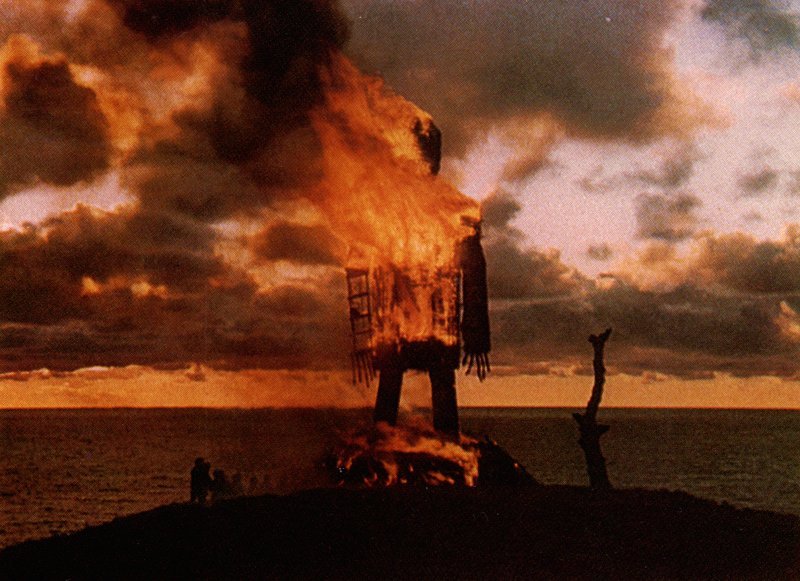
One of the few cult movies that deserves more acclaim than it already garnishes, The Wicker Man is a deep, mysterious, smart and truly terrifying tale of religious tolerance that will stay with you long after the credits roll. The true beauty of 'The Wicker Man' is that its rich message and difficult themes are not smashed into the audience's face, rather they are gradually coaxed from the orange coals of curiosity and horror until it is literally a towering fire of macabre controversy during the final minutes.
'The Wicker Man' opens with Sergeant Howie arriving from the mainland of Scotland to the isolated island community of Summerisle. He is investigating a case of a missing girl, but he soon learns that this will be anything but a typical case. The alleged mother of the missing girl has no recollection of her and introduces Howie to her only child. Things continue to go south when Howie checks into his inn, as he observes a public orgie in the twilight and is seduced by a hypnotic spell from the inn's daughter.
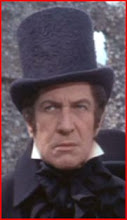
Howie's by-the-book demeanor and God-fearing spirit is put to the test when he hears an adolescent class of girls being taught about how fallic symbols are everywhere, learns that the town is a giant Pagan contingent who worship the "old Gods," and when he meets Lord Summerisle himself, played by (who else?) Christopher Lee. Summerisle does not hide the fact that the missing girl is in fact dead, and he has his blessing to continue with the investigation, but warns him that he may not enjoy their traditional May Day celebration. Growing more and more suspicious and bewildered, Howie sneaks his way into the festival, when the true intentions of the populace (and the crime he is investigated) are revealed.
The theme of religious tolerance emerges early, as the Christian Howie is mortified at the practices in Summerisle. All of the island's inhabitants are clearly happy with their way of life, but Howie's staunch British values force him to question why they follow such a faith. This is why 'The Wicker Man' is still relavent, as all cultures will continue to ponder what is the 'right' religion to be a part of. But this advanced plot does nothing to take away from the horror-feel of this film, which reaches a stirring peak with its end that will leave you speechless.
Prime Cut
Must see if you like dark/violent comedies
Starting in the mid 60s, the film industry became more and more liberal with its tabboos, with filmmakers continuing pushing the limits of what was acceptable on the screen. Prime Cut is a perfect example of how fast the industry changed. Made in 1972, just eight years earlier, it would not have been possible to make such a movie, especially in America. 'Prime Cut' was one of the first dark/violent comedies, which means it's not exactly packed with jokes, but the characters, situations and action make it funny in a disturbing/quirky kind of way. This genre today includes the likes of Pulp Fiction, Snatch, Kill Bill, Sin City and Layer Cake. 'Prime Cut' is just as violently zany and amusingly strange and kinky as the latter movies with a twist of midwestern hospitality and a smashing cast.
The opening scene of 'Prime Cut' sets the tone for the rest of the film, as we see a meat processing plant as the opening credits roll. By the end of this sequence it becomes apparent that the meat being transformed into sausage form is that of a very unlucky person. These sausages are sent from the Kansas City plant to the gang in Chicago who sent said unlucky person to retrieve their money. No, they are not joking. So the gang sends its resident hardass Nick Devlin (Lee Marvin, yes!) and some of his flunkies out of the city and into the country to get the money owed to them by cattle baron/mobster/asshole Mary Ann (Gene Hackman). His name really is Mary Ann, and best of all there's no attempt at an explanation of it either, the other characters don't even bat an eye when referring to this very scary man as Mary Ann.
But ole' Mary doesn't just sell cattle -- he sells flesh, as in human, as in prostitutes, as in slaves. Nick gets into Mary Ann's flesh auctions because the two go back a ways, and Nick takes a liking to one particular piece of flesh -- an unbelievably young and cute Sissy Spacek, in her first starring role. Spacek and Marvin make a good team, and they might just take down Mary Ann's whole operation, but not before feeding a limousene to a thresher, driving a semi-truck through a nursery, watching Gene Hackman nosh on tripe and setting more than a few orphans free.
May
Must see if you aren't afraid to be entertained and completely disgusted
The first shot in May is only about 0.8 seconds long, but it is 100% perfect and I don't think I've ever seen anything else like it. You don't really know what you've seen, but it sets up a terrifying scene at the end, so that you somehow know inside you what's coming next. It's the only possible way the ending could by any more horrifying. It also makes you wonder (around the one hour mark), just how the movie is going to get back to that first 0.8 seconds.
That's because 'May' is only a horror movie for the last 20 minutes or so, much like Carrie, which many will compare 'May' to. And the two are very similar. Both title characters carry the evil passed on to them from their mothers, and want oh-so-much just to be a normal girl with friends, even if that means spilling blood by the gallons.
You see, May is not your average girl. Her closest friend is a mildly disturbing doll made by her mother after May could not find any friends at school. It's housed in glass, and seems to control May from behind it at times. As May sinks further and further from reality, we hear the glass beginning to break, as the true side of May wants to get out.
It wasn't always bad, though. May met a guy at the laundromat (Jeremy Sisto), who professes that he 'likes weird.' Perfect. Eh, no you don't pal, not this kind of weird. After May shares with him some stories from her animal clinic workplace over lunch one day, he starts to think, 'maybe I'll give normal a try.' Sisto's character distances himself from May and soon she decides to give her mother's philosophy of 'making' a friend for herself a go. This has horrific consequences, as she adds a equal parts Frankenstein and Ed Gein to this troubling mix. Director Lucky McKee takes a bold gamble with the final shot, one most directors would never dream of with a serious movie like this. Does it work? If it had been more subtle, it would be perfect, but as it is it's a fitting ending to this outside-the-box horror tale.
{{{spoiler warning}}}
One thought about the 'eye scene' that degraded it for me: YOU CANNOT CUT YOUR OWN EYEBALL OUT, at least not to the degree May did. The ocular bone protects the eyeball very well, that's why you don't hear about people's eyes falling out. It would be like trying to push a golf ball through a hole meant for a large marble, just wouldn't work. Sorry, my limited anatomical knowledge ruined that scene's shock value for me.


Wednesday, October 12, 2005
Recent Viewings
Thought I'd give some updates on some of the recent movies I've seen, which have shuffled through the "Last 5 watched" list on the right.
'The Osterman Weekend'
I was interested to see this as it is Sam Peckinpah's final movie. Probably my favorite director, Peckinpah's films all had the same theme of characters who were pushed to the edge by double-crosses and back-stabbing until finally they said 'screw it, I'm doing it my way.'
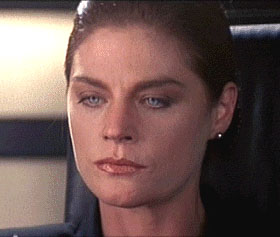
'Osterman' is no different in this respect and has a great cast of a young Rutger Hauer (a rare non-psycho role for him), Craig T. Nelson, Dennis Hopper and Burt Lancaster. You even get to see Meg Foster, who is best-known as one of the main characters in They Live, as well as having the freakiest eyes you'll ever see.
'Osterman' centers around John Tanner (Hauer), an investigative journalist who thinks he may have landed the story of his life when CIA agent Fassett approaches him and tells him of three suspected Soviet spies living in the U.S. Just one catch: they're three of John's friends who are coming over for the weekend. In exchange for Fassett coming on his show, Tanner must help turn his friends over to our side. What follows is a tense, emotional couple of days where the true intentions of Fassett are revealed.
'Osterman' holds up well because a large part of the plot is how television can manipulate the truth. Hauer and Nelson are fantastic, but I thought the movie was too short to really flesh out the overly-thick plot (adapted from the Robert Ludlum novel), which gets very confusing.
'Targets'
This movie also falls in the class of an older film that would resonate more with audiences today than when it was originally released. Peter Bagdonovich's first real turn as a director, 1968's Targets blew the doors off conservative America with a story that seems a little too realistic today.
Bobby is a clean-cut young man who, along with his wife, live at home with his parents. His existence is pure starched collar and TV dinner: he calls his dad 'sir,' is told by his mom not to stay up too late and lives in a house with nary a crumb on the floor. But Bobby also has a cache of guns in the trunk of his Mustang convertible and a brooding anger that just won't go away. One day, Bobby kills his wife and family, then heads to a water tower so he can pick people off on the freeway. His night won't be over until he heads to a packed drive-in and continues his marksmanship from behind the screen.
The other story in 'Targets' concerns the character Byron Orlock, a fictional horror actor played by Boris Karloff. Orlock is attending the drive-in that night as the premiere for his final movie and he will have a great deal to say in how Bobby's night ends.
What I liked most about 'Targets' was that there was no attempt to explain Bobby's actions. I read a synopsis that said he was a Vietnam vet but saw no evidence in the film. When he is hauled away by police, the only thing he can say is 'I barely missed!' Bagdonovich takes great care to show that Bobby appears as a wholesome person (he even packs himself a sandwich and Dr. Pepper to have on the water tower). Audiences in 1968 were probably by such a frank depiction of random violence, but viewers today would see it as reality, since such violence is depicted regularly in the media.
'Billy Jack'
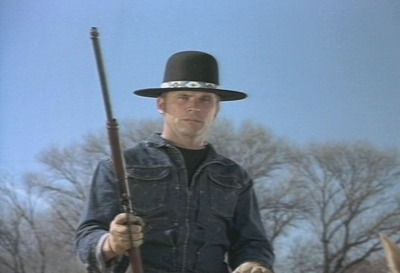
This was a nice surprise for me. I had little experience with anti-authority, pro-pacifist hippie movies, but this has to be one of the best. Billy Jack tells the story of its title character, a half white, half Indian ex-Green Beret who protects an Indian reservation and a liberal school located on it. The townies aren't too fond of the Indians, and when they try and push them out of their ice cream shops, Billy Jack is there to unleash some kung fu justice on them.
While there's plenty of action in it, 'Billy Jack' is still a hardy anti-violence movie because the Indians do not fight back as they know they cannot win and while Billy kicks his share of ass, he quickly discovers that it is a fruitless fight.
The uneasy tensions in this Arizona town come to a head when a hard-ass policeman's daughter runs away to the school on the reservation and falls in love with an Indian boy. Bad news. While trying to protect their newest student, the Indian school also tries to be accepted by the square townies, who view them as long-haired hippies.
The Indian school specializes in dramatics and actually much of the film was filmed via improvisation, giving it an even more realistic feel. Look for a young, shaggy Howard Hesseman as one of the school's performers.
'The Bank Dick'
Another nice surprise, as it was tragically my first W.C. Fields movie. It's amazing to think that Fields died two years after this was made, in 1942, because he seems so vibrant and lively in The Bank Dick. .
Watching Fields, it's easy to see the comics that have been inspired by him. The most obvious is Stephen Root's character Jimmy James on the much-loved sitcom 'News Radio,' it's almost a carbon copy of Fields' trademark bumbling annoying ways.