So I finally saw 'Borat,' and was surprised to see that even after three weeks, it could still sell out a theater. The whole place was in hysterics all the way through, and I couldn't help notice that it seemed like many of them had seen it before, with a select few conveniently saying the jokes before Borat did. I was expecting my wife to note enjoy it (I think she had similar thoughts), but even she (a first grade teacher) couldn't help but laugh out loud for the more funnier parts. I don't think I have much new to say about it that you've probably read before, but I will complain that in many scenes it seemed that most of the potential went unfilled. Why couldn't we see more of Borat in Washington, outside of telling Alan Keyes how he made friends at a Gay Pride parade, or asking Bob Barr but one question? Same goes for the final scenes in Los Angeles, where everything seems rushed, especially for the church bus that got him there, which was the subject of exactly zero jokes.
Outside of minor quibbles, the movie IS funny. Really funny. I was actually expecting it to be much more offensive, and thought it came off as relatively tame (minus a couple scenes). Some of the best material is in its lampooning of anti-semitism, such as the Running of the Jew tradition in Borat's village, which consists of someone in a huge Mardi Gras-style costume grabbing for money. When Borat and his producer are in a Jewish-run bed and breakfast in Georgia, they are horrified to find that the Jews can shapeshift into people, and can also take the form of cockroaches (which enter their room, but are soon turned away when Borat throws dollar bills at them). Then there's THE scene, which should be the funniest of any movie this year. It doesn't involve Borat embarrassing Americans, it's just ultra disturbing/genius slapstick that will leave you reeling.
'Borat' has sparked some interesting debate on Jim Emerson's Scanners blog, mainly on the debate of comedy criticism, and the funniest movies ever made. Emerson takes offense to the saying that analyzing comedy is anti-comedic, saying 'if you don't understand why you're laughing, when you're laughing, then you don't appreciate the comedy and you may as well not be laughing at all, since any old reaction is probably comparably appropriate for you.' I agree, but there have been many comedic experiences for me (such as this), where I would not even attempt to explain in words why it makes me laugh.
I've found that when discussing favorite films by genre, you generally find the biggest divide with comedies. I don't know if there has been studies on it, but just like there are scientific personality types, there are also scientific sense of humor types. For example, there is a definite group of people who will never find Wes Anderson movies funny. Another example is the group of people who will never find Monty Python's Life of Brian to be that funny. I subscribe to the latter group, and although I thought 'Life of Brian' was well made an had a few good gags, there are some people (read the comments for Emerson's post if you don't believe me), who feel that it is God's gift to comedy.
Emerson's request was to provide a list of favorite off-the-beaten-path comedies, but I'm sad to report that most of my favorite funnies are of the mainstream variety. You're all probably familiar with these four, and so instead I'd like to share my favorite moments from each one.
The Royal Tenenbaums
I've heard this movie described as all style over substance, which is partly true, but it's also true that the Tenenbaums style is the substance. I laugh the most at the small, but brilliant details in Anderson's movies, such as:
--Royal Tenenbaum being served some sort of exotic martini after discussing with his children that their parents are getting a divorce. The timing, as always, is dead-on, and after multiple viewings you find yourself busting up at the thought that Royal had the foresight to order Pagota to make him an exotic martini prior to this critical moment. This scene is also another example of Royal's almost-sincere dialogue:
'Why?'
'Well, your mother has asked me to leave, and I have to respect her position on the matter.'
--Maybe the best-written line in the movie is Eli's excerpt from his book 'Old Custer.' The joke is wonderfully economic, because in a few lines, you learn that 'Old Custer' is not only a bad book, but a book that Eli is a bad author, who is trying desperately to sound smart. It would be one thing just to have the book be poorly written, but to have it depicted as being over written is gold:
The crickets and the rust-beetles scuttled among the nettles of the sage thicket. "Vámonos, amigos," he whispered, and threw the busted leather flintcraw over the loose weave of the saddlecock. And they rode on in the friscalating dusklight.
--The paintings. No explanation really needed.
--Gene Hackman and Danny Glover have the movie's two best exchanges, this being the best:
'I know what stomach cancer looks like. I've seen it, and you don't eat three cheeseburgers a day with french fries when you got it.'
'How do you know?'
'My wife had it.'
The Big Lebowski
This movie used to be a sleeper, then it was underrated, then it was one of the best comedies of the past 20 years, and now people groan whenever you want to talk about it because everything has already been said. Well I'd like to add a few of my own thoughts, if I may. When you watch this movie enough times, you can start to make a case that every line in the script is funny. I know this because for the last four months, I've communicated with a co-worker almost exclusively in 'Big Lebowski' lines. We've reached the point where yesterday I said Walter's line, 'not exactly a lightweight' (from the 'Branded' conversation) to him and we both laughed out loud. It occurred to me later, that the line would only be funny when placed into the context of the whole movie, and perhaps then only to someone who has seen it multiple times.
What keeps you laughing when your viewing count is in the double digits (or, in the case of my co-workers, the triple digits) is the unique way in which most of the characters genuinely straddle the line between genius and dufus with everything that comes out of their mouths. When Walter and the Dude are raging about the literary connections between life and Vietnam and quoting Lennon one minute and then honestly debating how a shitty rug tied together a shitty apartment the next, it never stretches the reality of their characters. Nor does it hurt that their performances of these characters also include such props as mountainous slurs, dirty jellies and Miller Lite inside a small plastic cup.
--'The Big Lebowski' is also full of wonderful details. I always lose it when I see Walter casually sit down at the landlord's recital in a full suit. Same goes for the Dude's reaction of reassurance when Walter tells him that the Jesus really is a pedophile.
American Movie
By far the most off-the-beaten-path of my choices, which is a shame. This movie should be more widely seen, as it would be at the top of any 'best mockumentary' list ... if it actually was fiction. What makes 'American Movie' so goddamn hilarious and breathtaking at the same time, is that it's just seemingly ordinary parts of a person's life that makes it into a classic comedy. Chris Smith's camera follows filmmaker Mark Borchardt, who falls somewhere between artist, fool, community leader, blessed/wretched family member/friend and dumbshit. Borchardt (whose very appearance is cause for laughs), is intent on finally finishing his grassroots film production of the horror movie 'Coven' (pronounced COH-ven, not CUV-en, because the latter 'rhymes with oven'), even if it means wringing every last cent out of his dying grandfather, causing physical harm to his friends and shattering his family life.
If that last sentence sounded kind of tragic, rest assured, it most certainly is, but every minute of it is so back-breakingly hilarious. Every scene takes the layers of previously built up comedy and adds one after another, with the topper being the unbelievably awful movie-within-a-movie that Borchardt makes (the DVD includes the full version). There's no movie that prepares you for the comedic emotions you feel while watching Borchardt futily try to record a line of dialogue from his grandpa, then see the finished product with the unfortunately-dubbed line put in. And that's just Borchardt, there's an entire community of characters here, ranging from his scratch-off ticket addicted friends to the local 'actors' who are willing to put up with Borchardt and possible harm to their body all in the name of being in a terrible movie.
Mystery Science Theater 3000: 'Eegah!'
Everyone has their favorite MST3k episodes, and for me and my family, it's this one. Why? It's not the worst movie MST3k has done, but it seems to give them the most material:
--'Star' Arch Hall Jr. is not really ugly, he's just incredibly weird-looking, which leads to many unintentionally frightening shots of his face, and subsequent skewering by Tom, Crow and Co.
--Hall also thinks he can sing, and lends his talents more than once to this movie . . . very poorly. It's one thing to sit down with an acoustic guitar, it's another to bring your Fender poolside complete with a giant amp.
--A truly bizarre scene where Roxy gives her dad a shave.
--An oven in a living room.
--Director Arch Hall Sr.'s decision to dub in all the lines . . . himself!
Sunday, November 19, 2006
Funny time with film movies for me!


Monday, November 06, 2006
Leftover candy, and what's in the box?
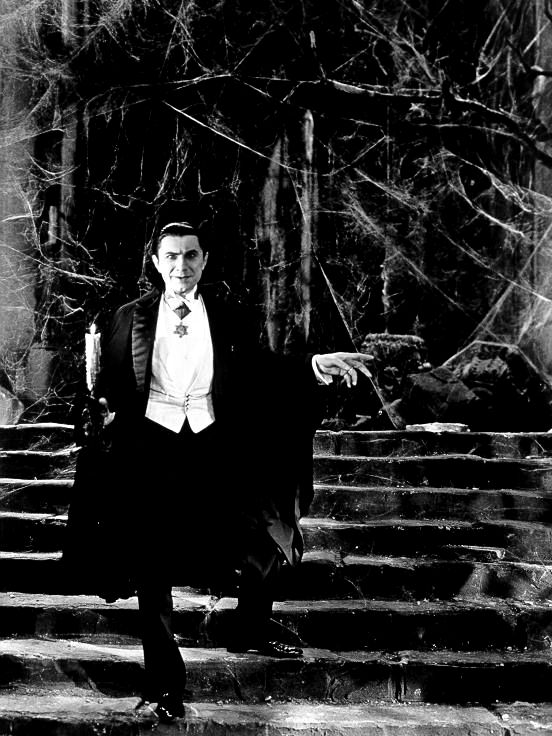
I don't even have to tell you that Horror Month was a smashing success, and will surely rise from the dead next year as well. But there's been a little overflow from the horror cauldron with one feature I dearly tried to get up before the month ended. In October I really got into the Universal monsters and have now seen all of the initial installments in their respective series. I had hoped to rank each of these monsters, and now have the chance. Universal's monster age helped install these characters in pop culture forever and really launched American horror as we know it. Note that Universal's Legacy Series is still in print, offering all the sequels of a series for around $20 each.
------------------
6. The Mummy
This was the biggest surprise for me, 'The Mummy' was a huge disappointment for me and has probably aged the worst out of the six. Even though there's lots of potential on the table with 'The Mummy' (Karloff in the title role, Egyptian imagery and popular mythology), the biggest problem I found was with the mummy monster itself. With the other monsters on this list, you have iconic characters who are unmistakable in their guise -- with the mummy you have Boris Karloff in a robe. We all picture a mummy as bandaged up, but Karloff is only briefly seen in that get-up, for the rest of the movie he just looks like an old man wearing a gown -- not too memorable. The plot is the same as any other mummy movie, with explorers unintentionally waking a mummy, then suffering the consequences. In this version Imhotep is revived, then for years takes on the role of an Egyptian society man named Ardath Bey, who then tries to convince a woman that she's the reincarnation of his ancient love . . . and there's hypnosis . . . and archaeologists talking . . . The End. What really hurts this movie is that despite the fact that it is set entirely in Egypt, most of the scenes take place in living rooms and a museum. Imhotep is never frightening and the suspense at the end is completely forced. I've heard that the sequels for this series are the worst of the lot and it doesn't surprise me.
5. The Creature from the Black Lagoon
This is actually less of a movie than 'The Mummy,' but what makes it more watchable is the title character, which remains one of the best-imagined and crafted monsters in history. The creature is essentially a man-fish, but it never looks campy -- always terrifying and completely menacing. Unfortunately, it's stuck in a boilerplate early monster movie (scientists find monster, monster attacks, scientists attack monster, monster returns, monster takes girl, monster is blown up by scientists). There's aboslutely nothing noteworthy or original going on here except for the monster, which at times is more than enough. Another aspect I like about this series are the names -- The Creature from the Black Lagoon, Revenge of the Creature (Clint Eastwood's acting debut) and The Creature Walks Among Us (as Burt Reynolds would say in 'Boogie Nights' -- 'Those are great names!'). Finally, if you have a chance seek out the pinball game based on this movie, one of my all-time favorites (the Universal-licensed Monster Bash is another good one).
4. The Invisible Man
Probably the most forgotten of the Universal monster lineup, 'The Invisible Man' has astounding special effects for its era and an endless supply of plot gimmicks. One of the first chances for America to 'see' actor Claude Raines, whose classic voice was perfect for the cackling title character, he is usually wrapped in bandages with sunglasses -- his condition the result of an experiment that slowly drives him insane. There are plenty of morality issues at play here, most prominent being what you would do if you couldn't be caught, and the psychological effects of not being able to interact with anyone. Like most of Universal's monster movies, the title character is easy to root for, and the special effects still hold up well.
3. The Wolf Man
Of all the entries on this list, 'The Wolf Man' exceeded my expectations the most. Wildly entertaining, it reminded me in some ways of a horror version of 'The Third Man,' with an American in a foreign country who quickly finds himself in trouble with just about everyone. Universal appeared to go all out on this one, with huge sets and prominent talent (Raines again, with Lon Chaney Jr., Bela Lugosi and even Ralph Bellamy in a small role) to go along with groundbreaking creature effects. After returning to his family's English estate, expatriate Larry Talbot soon hears a folk rhyme being repeated about a wolf man, and after defending a woman from a wolf attack he is told that he may fall under the fateful spell himself. Chaney is perfect as the intellectual, non-believing American, with a towering stature that makes him stick out from the locals (including his father, played by Raines, who appears to be at least a foot shorter). What must have made this movie unique in 1941 was the fact that it was essentially the first werewolf movie, introducing America to a piece of little-known old world mythology. Universal also added to the lore with devices such as a werewolf being able to see a pentagram on the hand of his next victim. What might disappoint viewers now however, is the first crack at what a werewolf should look like -- a sometimes goofy creature covered in hair who tries to walk like a wolf would on two legs.
2. Frankenstein
It's hard to put 'Frankenstein' below anything, but it's also unquestionably overshadowed by its sequel, Bride of Frankenstein. Like the No. 1 entry on this list, it delivers on all the praise and hype it gets, and is unique in the fact that the sequel really is a 'part 2' -- taken together it feels like one complete story. There are so many moments in 'Frankenstein' that set the foundation for future horror movies, the plot playing on the public's distrust of science and medicine and a number of religious and existential commentaries. In some ways, 'Bride' can be considered the perfect sequel, picking up right where the original left off and adding new conflicts, essential characters and an even better ending.
1. Dracula
After finally seeing this masterpiece, I don't know how I put it off for so long -- maybe I thought I knew the story well enough after seeing other versions? Nevertheless, this is a movie that defines the era with a perfect combination of acting, direction and source material. What stands out even more than Lugosi's seminal performance is the job by director Tod Browning, who combined his expertise in silent horror to create a near-opera. Browning's boldest decision was with the score -- a pulsing, varied rhythm which is played seemingly through the whole running time. At some point it stops becoming a score and feels more like the musical accompanyment that were used with silent films. Even in dialogue-heavy scenes, the strings never stop, which heightens the creepy mood. And then of course there's Lugosi, whose every nerve ending is never less than full throttle. An actor who made his mark in plays, Lugosi adds a stage element to his performance, and his small knowledge of English even helps this -- since he had to learn his lines phonetically, they end up sounding all the more creepy. Those familiar with the Bram Stoker's novel will get a kick out of how much it is compressed, with almost all of the count's backstory cut out. I must say, that although I recommended against buying the new 75th Anniversary DVD of 'Dracula' (in favor of the Legacy series), I now have to say it's an essential upgrade. I had to pick it up after further inspection, which revealed that it does contain the technically-superior Spanish version, as well as a new 5.1 recording of the score by Phillip Glass (an oddly generous feature which sounds terrific).
-------------
Maybe the world does need all those Superman discs
Some time ago I trashed the notion of a mega Superman box set, featuring no less than 17 discs. Well, after seeing the official specs, I now have to take back those words. Now checking in at only 13 discs, the Superman Ultimate Collectors Edition will cost you only $70 at Amazon and give you all four original Superman movies (including two versions of 'Superman: The Movie' and 'Superman II'), 'Superman Returns,' eight vintage Superman cartoons, the 1951 movie 'Superman vs. the Mole Men' starring George Reeves and the extensive documentary 'Look Up in the Sky!: The Amazing Story of Superman,' which was released on a standalone DVD earlier this year. There are just too many goodies in this set, but what makes me happy is that they're including both of the new 'Superman II' releases. Both Superman II: The Richard Donner Cut (check out that cover art!) and a new two disc version (containing extras not found on the Donner Cut) of the theatrical cut will be for sale individually, but Warner Bros. thankfully tossed them both in this lavish set. I'm also pumped that this isn't simply a bunch of DVDs crammed in a new display box, take a look at the presentation above. Warner Bros. again shows why it produces probably the best DVDs out of all the major studios.

Saturday, October 28, 2006
HORROR MONTH: Scream-a-thon
Kudos to Joseph B. and It's a Mad Mad Blog, who had the ghoulish idea to host a blog-a-thon for your Top 15 Horror Movies. Since DVD Panache's inclusion in Dennis Cozzalio's bloody successful Robert Aldrich blog-a-thon brought in so many new readers, I say why not to another blog-a-thon (and besides, I was running low on ideas for Horror Month). I usually don't like to rank movies, but in this genre I definitely have a top 5, so here goes:
15. Jeepers Creepers
Before you raise the back of your hand in my general direction, allow me to explain the story that goes with this selection -- which is admittedly a troubled, uneven movie that fails to live up to the promise of its first act.
It was the summer of 2001, I was in the midst of a carefree summer job as an ice cream man in Portland. It was August and my interest in the job was waning, and I found myself loafing more than usual, and this day would be my ultimate loaf. A naive mother had given me a crisp $5 bill in hopes that I could find her daughter at a nearby block party and give her some ice cream. This was definitely not going to happen, but I took her money just the same, and figured what better destination for a lazy, greedy ice cream man than Lloyd Cinemas, and what better lazy summer day movie to see than 'Jeepers Creepers'? I sheepisly parked my three-wheeled ice cream cart in the parking lot and went to the movie, which strangely had me scared absolutely shitless for the first half, then eventually tailed off. Anyway, what was memorable about this outing is that afterward I headed for the exits with the 10 or so other people that were in the theater, and they all watched in somewhat amusement as I casually sauntered over to my three-wheeled ice cream cart, sped off and quickly shifted into my third and final gear. For so many reasons I felt more like a genuine jackass than most days, and that's my 'Jeepers Creepers' story.
14. Friday the 13th Part VI: Jason Lives
Of the three horror sequel machine franchises from the 1980s (Friday the 13th, Halloween, A Nightmare on Elm Street), you have to at least admire the Friday the 13th sequels for trying to mix things up. The killer starts out of course as Jason's mother in the original, then in the sequel Jason is simply a woods-living, burlap sack-wearing hermit killer before finally donning the mask in the third one, seemingly killed for good by Corey Feldman in the fourth (and for a brief time, the 'final chapter'), stupidly copy-catted in the fifth ('A New Beginning' = a new stream of cash), before he is awesomely brought back to his bad self in my favorite sequel. This one has a lot going for it, starting with the name, it's so perfect. Then you have the tacky-yet-fun way Jason is resurrected: two teens want to 'make sure' he's dead, so of course they pick a night heavy on the lightning to visit his grave; after diggin and opening up his coffin, one of the boys (despite obviously seeing that he's dead) plants a rod into Jason, only to have said rod struck by lightning and have Jason rise out of his grave like Frankenstein. Jason doesn't waste any time in literally ripping the heart out of one of the boys, then we're treated to a James Bond-style credits intro with Jason walking onto a black background and slashing the screen open. Everything works well and I could watch this opening every day and still be entertained.
13. Prince of Darkness
John Carpenter's most underrated horror entry, 'Prince of Darkness' is a great entry into the brains vs. evil series with our gang of intellectuals battling satan with nary a 2 x 4 (okay, I think there's one 2 x 4) to defend themselves. There's a lot to like here, starting with Victor Wong (!) as a professor who leads his team of students into an abandoned ghetto church where an ancient canister of green goo may hold the devil himself. Outside the church, a gang of hypnotized homeless people start to gather (led by Alice Cooper) as satan's powers start to take control of the area. Making matters interesting is that our heroes are experiencing the same dreams: an apparent video transmission from the future. You can tell Carpenter had a blast making this and there aren't any cop-outs with the story and climax.
12. Village of the Damned (1960)
The idea of children overwhelming adults is a great horror device, especially since the grownups seemingly can't fight back since . . . they're just children. Even though the budget was dirt thin, the production values in this British thriller are high and the special effects (rather, effect of the children's hypnotizing eyes) really work. What makes this one stand the test of time is just the acting of the kids, they always look terrifying.
11. The Blair Witch Project
Don't laugh. Or stop reading. I'll admit that viewed on its own today, this movie is ineffective, but when I saw it (first week it was released), everyone in the theater (including me) was genuinely frightened. It might have something to do that it was simply more of an experience at a theater, when its low-res, jarring camera work had a dizzying effect. I saw it with two girls who had no knowledge at all of the movie, and they thought it was a straight-up documentary. For them it was without a doubt the scariest thing they had ever seen. I knew that it was fiction, but really had not read much about it. Years later I watched it again on video with a group of people who hated it, and even I admitted that much of the charm was lost, but for me on that one summer day in Ketchum, Idaho it was worthy of this stature in my book.
10. Blue Velvet
David Lynch's classic is hard to put into just one genre, but its horror elements permeate the whole film and it contains one of the all-time most terrifying scenes. After Kyle MacLachlan's character first meets Frank Booth (No. 1 on my list of the Five Characters You Meet in Hell), he is taken to Ben's house, where he endures the worst 20 minutes of his life. In front of Frank's friends, he is emasculated and thoroughly humiliated, though Frank makes it feel like it's how he treats anybody. You get the feeling through the whole scene that Frank is just teetering on and off the edge of homicidal rage, and when he can't take the weight of Roy Orbison's 'In Dreams' (which Ben sings in a bizarre karoake moment), he snaps. Frank is my favorite cinematic monster, and this is his movie.
9. Demon Knight
Outside of Troll 2, maybe the most fun you can have watching a bad horror movie. Billy Zane is given no leash as he plays a demon out for souls, Dick Miller is Dick Miller, and you even get Thomas Hayden Church and Jada Pinkett-Smith. A sort of Zulu-meets-The Exorcist thrill ride, here's a sampling of what you get: demonic Billy Zane, Christ's blood can keep demons out if it's dripped on a doorway (check that: makes demons explode), a road house full of miscreants and all sorts of weapons, demons getting shot in the eyes (that's how you kill 'em) and Dick Miller in a room full of topless, beer-drinking women. It's best when watched with a group.
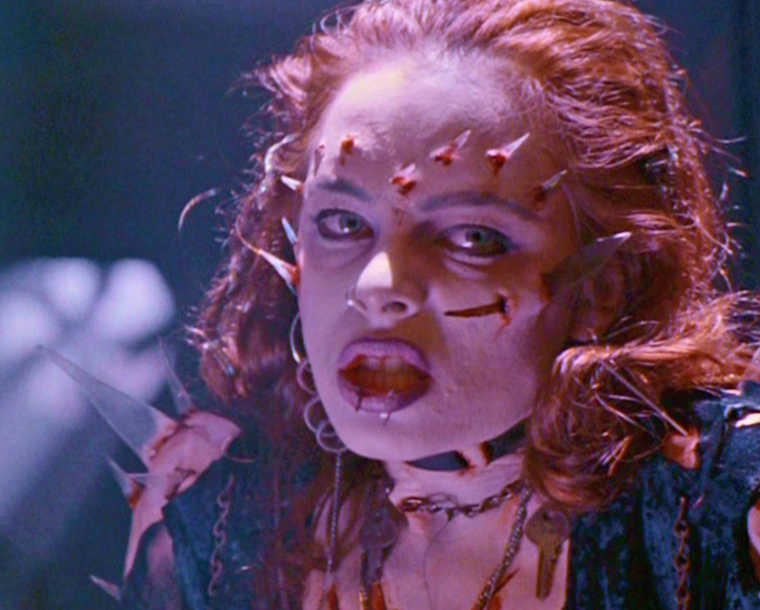
8. Return of the Living Dead III
Take a look at the above picture, that's our heroine in this surprisingly original zombie movie. After his girlfriend is killed in a motorcycle accident, she is brought back to life through some nifty military technology. But the two lovebirds didn't count on her insatiable appetite for brains, or the fact that only pain can temprarily ease her hunger. Julie gets proactive and creates this new look for herself (see above), but she's still got the munchies (oh does she!). We're also given way too many lost limbs and quarts of blood, a couple cyber-zombies and an oddly touching (Shakespearean . . . almost) climax. The original in this series is also worth a look (skip the sequel), but the zombie queen character really does it for me, it's rare that you get much originality with zombie movies.
7. Psycho
The murders in this classic isn't what makes it one of my favorite horror movies, it's the lines Norman Bates gets, and how he delivers them. I always get a chill when I hear him say 'a boy's best friend is his mother' -- there's so many things wrong with it, and the timing is so perfect. The scariest part may be when Vera Miles wanders into Norman's mother's room -- nothing really happens, but you're on the edge of your seat the whole time . . . and then you see the bed.
6. The Thing
Carpenter not only creates a superior remake of the classic The Thing From Another World! (the movie Jamie Lee Curtis puts on while Michael Meyers is on the loose in Carpenter's Halloween), but he also set a benchmark of special effects terror which has rarely been equaled. Far ahead of its time, who can forget the severed head sprouting legs and crawling off like a spider? With equal parts claustrophobia and mystery, the tension is boiling throughout most of the movie. Filled with so many memorable scares (the blood testing scene still gives me trembles), 'The Thing' was perhaps the highpoint for 80s horror.
5. Freaks
Tod Browning really was the Wes Craven or John Carpenter of his era, doing monster movies such as 'Dracula,' 'Mark of the Vampire,' and other freak-fests like 'The Unknown' and 'The Devil Doll.' But 'Freaks' remains his best. Visions of The Living Torso lighting his cigarette or the hideous pinhead siblings remain shocking to this day. Best of all, 'Freaks' never comes off as exploitation, the movie never judges the freaks, showing that it's us 'normal' people who are the most troublesome creatures. Though the freaks are respected, they're responsible for the biggest scares of the movie: the 'gooble gobble' welcoming feast, stalking their tormentor in the rain and the shot of The Human Torso writhing in the mud with a knife in his mouth.
4. Rosemary's Baby
Entrapment is an emotion utilized by the best thrillers (see: almost all Hitchcock movies), and Roman Polansky took it a step further by having Mia Farrow's character feel completely trapped even though she lived in New York. No matter who she turned to, it seemed they were also involved in the horrible plot to impregnate her with the anti-christ. It speaks to Farrow and Polansky that the most twisted and frightening element of the movie is just a slight twinkle in the actress' eye at the very end. You know when she approaches the baby carriage there's two ways she can react, and when you see that twinkle in her eye and the roots of a smile, you feel sick to your stomach
3. Bride of Frankenstein
The best sequel in horror history, and right up there with The Godfather Part II as the best of any genre. 'Bride' takes the Frankenstein story further, introducing us to a monster who has grown and mad scientists who aren't ready to stop their work. The emotions of love, birth and homoeroticism help this go beyond being just a monster movie. Filled with strange and deep characters (I actually prefer Dr. Pretorious to Dr. Frankenstein), the movie slowly builds to the inevitable meeting between bride and groom before they resort to the one thing that brought them together: death.
2. Halloween
What would horror be without this movie? It jump-started a string of slasher flicks that continued into the 90s and perhaps actually furthered the culture of Halloween as well. Beyond all the hype, 'Halloween' is genius from start to finish -- slightly amazing considering it was made on a tiny budget and was the first real effort from Carpenter. Camera tricks such as young Michael donning a mask while we are seeing through his eyes and garnering many scares in broad daylight (that walk home of Lauie's just kills me) is what made this stand out from other gore fests. But that's one thing that 'Halloween' thankfully lacks -- excessive gore. Grindhouse pictures in the 70s gained audiences through shock-value, but there's really not much of that in 'Halloween,' the scares come from expert filmmaking and acting. Carpenter plays it close to the vest for most of the movie, letting his scares slowly build and then inserting seminal moments of fright -- Laurie discovering all the bodies of her friends, Michael Meyers' (err, The Shape) mask briefly being removed, Laurie watching the murder unfold across the street.
1. The Night of the Hunter
If there's a movie more important to today's horror genre than 'Halloween,' it's 'The Night of the Hunter,' which introduced many horror canons and did it with timeless, revolutionary images and one of the scariest villains of all-time. Faithful DVD Panache readers (I know you're out there) will know that I reference this movie often, and I have to admit it's one of my all-time favorites. In an era when horror movies meant monsters and aliens, Charles Laughton gave us Rev. Harry Powell, a man with 'LOVE' and 'HATE' tattooed on his knuckles, who believed he was serving God with his many killings. Powell carries with him the powers of persuasion and a deep hatred for the sinful temptations that only women can provide man.
Our heroes are John and Pearl, who watched their father be dragged away after he robbed a bank. His cellmate was Powell, who learned that somewhere in that river town was the buried money. In an endless series of unforgettable images, Powell enters the lives of John and Pearl when his silhouette is projected on their bedroom wall from a street light. Powell aims to find the loot by marrying their mother, thus introducing the movie's trademark horror element. Since the movie is told (and sometimes shot) through the eyes of the children, we feel the youthful helplessness they experience with Powell as their step-father. John's calls of foul go unheeded by adults in the community, and it's not until their mother is murdered that they take action into their own hands. After luring Powell into the basement, the kids unleash their trap on the killer, escaping and locking him in. It's then when 'Night of the Hunter' changes from a psychological horror to a straight-up slasher movie, with Powell playing the role of the tireless stalker, who seemingly travels at a leisurely pace, but is able to keep up with his prey.
Elements such as having John and Pearl escape just out of the killer's grasp would be used again and again in horror movies, but Laughton's impossible images could never be replicated: an overhead reveal of one of Powell's victims -- only her arm visible to a group of kids, Pearl's dollar bill doll floating to the feet of an unsuspecting Powell, and the movie's trademark scene -- Willa's body waving in the weeds underwater.
Tuesday, October 24, 2006
HORROR MONTH: Me and Ghoulio Down by the Cemetery

By rule, horror movies are filled with cliches, it's just a matter of how well they're utilized. One of the more prolific horror cliches is the cemetery as a dominant location. It makes for an easy eerieness and is a device for terror such as zombies and grave digging (or nude dancing in the case of Return of the Living Dead). With perhaps thousands of cemetery scenes existing on film, there are some who stand above the rest, and I give you some of my favorite cinema cemeteries:
The Omen
Easily the scariest scene in a movie full of them. Gregory Peck and David Warner (in familiar territory as a kook) find themselves in a ghostly Italian cemetery looking for evidence that Peck's child is the anti-Christ. Of course the skies are black and full of lightning, but how director Richard Donner really ups the tension here is having his characters stalked by a trio of demon dogs. Peck and Warner thought they were alone until they find themselves being tracked by the eyes of three ghastly dobermans. This sequence plays out perfectly and I've watched it dozens of times, I even stopped to watch it when I noticed the Spanish channel was showing 'The Omen' one time.
Phantasm
Not only does 'Phantasm' have two handfuls of cemetery scenes, but this is one HELLUVA cemetery and accompanying mortuary. Vast and chilling, with the Holy Shit-freaky Tall Man presiding its grounds, this is not your average cemetery. The mortuary is even more spooky, with a magic flying orb/killing machine waiting for any sneaky kids who are the main characters in a horror movie. Stay the hell out of this cemetery and the whole town in general, and be sure to watch until the very end (goddamn that Tall Man!)
The Leopard Man
A rusty thriller, but nonetheless home to a pair of the scariest sequences I've ever seen. Both of them involves a leopard, and the scarier of the two takes place in a cemetery. An unlucky girl in a terrorized New Mexico town finds herself locked inside a claustrophobic, moon-lit cemetery -- the kind with a big gate and high stone walls. What the girl does not notice is that in the big oak tree overhanging the cemetery is a hungry panther. The scene is nearly silent and the pacing is note-perfect for some genuine chills.
Beetlejuice
I've seen this movie so many times, and I am still patiently waiting for a real DVD release. The movie really kicks into gear when Alec Baldwin and Geena Davis meet our title character after being shrunk down to size and exploring the miniature town in their attic. Beetlejuice is buried in the cemetery and the couple has to dig him up in a beautifully-twisted Tim Burton trademark scene where Baldwin and Davis stick shovels into the fake grass of the cemetery and find Michael Keaton back when he could still find work. It's a simple scene, but it -- like the rest of the movie -- has the perfect look to it, in the way only Burton could do it.
The Good, the Bad and the Ugly
I realize this is Horror Month and all, and that this post is about cemeteries in horror movies, but I couldn't let myself publish this without mentioning the greatest cemetery ever caught on film. A mammoth finale setpiece, the endless expanse where 'Unknown' is buried along with the treasure is unconscioubly beautiful and impossibly grand. It's also when the best theme of Morricone's classic score kicks in, leading to the fulfilling tri-duel climax. I have no idea how they made this cemetery (was it already like that? is it still there?), but man I love looking at it.
Friday, October 13, 2006
HORROR MONTH: 15 'Sweet' minutes

DVD Panache is proud to be a part of Dennis Cozzalio's Robert Aldrich Blog-a-Thon today. Dennis organized this nice event, and his blog Sergio Leone and the Infield Fly Rule serves as the launching point for several other blogs contributing Aldrich-themed blogs (I particularly enjoyed Andy Horbal's take on The Dirty Dozen and the Last Supper). Since it is Horror Month here at DVD Panache, I chose to take a look at perhaps my favorite opening sequence of any horror movie -- Aldrich's Hush . . . Hush, Sweet Charlotte. In 15 minutes we get giant chunks of the plot, unforgettable shots and a pace and sense of dread that the movie really never reaches again after the credits roll.
------------------------
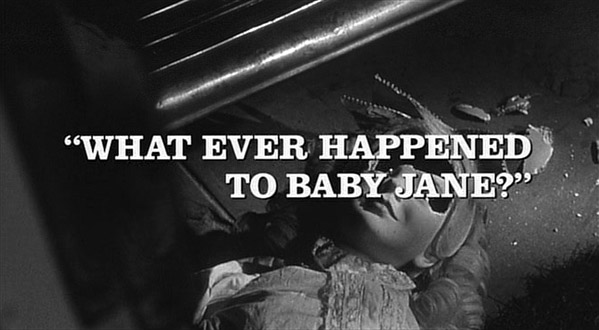
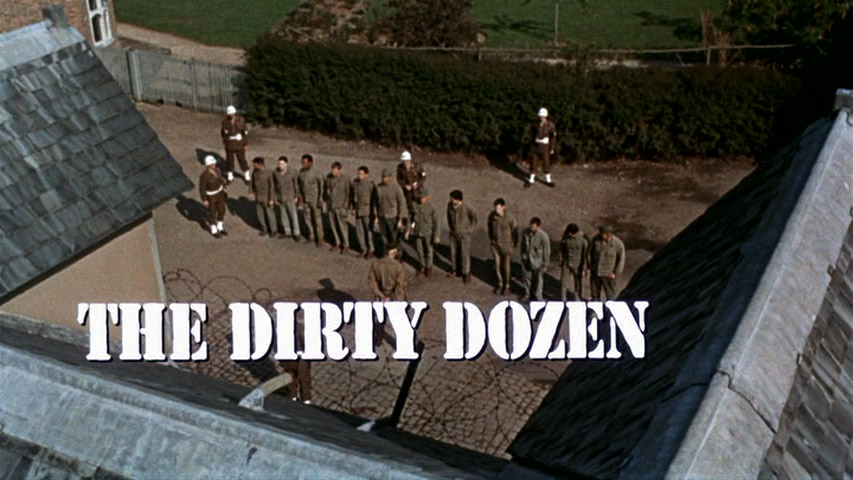
'Sweet Charlotte' is Aldrich's unofficial follow-up to his timeless What Ever Happened to Baby Jane?. Both films deal with simmering family tension and jealousy, and with Joan Crawford and Bette Davis lighting up the screen in 'Baby Jane,' it was planned for them to reprise their co-billing, but it was not to be (Crawford's role was offered to several other prominent actresses, as explained in greater detail here). Olivia de Havilland eventually accepted the role and her quiet, repressed demeanor was a perfect contrast to Davis' searing expressions. Besides themes and cast members, 'Baby Jane' and 'Sweet Charlotte' also share highly memorable opening sequences. In 'Baby Jane,' Aldrich gives us a brief but effective expository flashback to the good times, before flashing forward to the troublesome present and giving us the title card. The long delay of the opening credits would be seen in other Aldrich movies (such as 'The Dirty Dozen,' where it was used to great effect). Aldrich no doubt saw that using a prologue such as this before the credits could be used to take his audience off guard and draw their attention even more, and he ratcheted up this technique to the highest possible level in 'Sweet Charlotte,' where we are given a variety of scenes, tones and imagery before we are told what movie we are watching.
Aldrich opens the film with a series of stationary shots of a striking Louisiana mansion during the prohibition era. Each shot shows a different angle of the house and gradually draws closer, until the faint talk we heard in the first couple shots becomes Victor Buono's bellowing Big Sam Hollis. The terse exchanges between Big Sam and John Mayhew (a young Bruce Dern) gives us plot tidbits from characters whose only screen time is in this opening prologue. John is married to Jewel, but plans on eloping with Big Sam's daughter Charlotte at an upcoming party, until Big Sam tells him to do otherwise. Key foreshadowing in this scene includes John defending himself with a chair as Big Sam approaches him and a painting of Big Sam seemingly looking down on John. The next sequence is set up perfectly as Big Sam begins to tell John what his instructions are for the following night's party.
The party sequence is where the prologue literally starts dripping with Aldrich's craftsmanship. We are led into the stately event and hear our first nugget of pulp dialogue: 'Have you seen Charlotte? I've got some killing news to tell her.' I had always heard this line as 'killer news,' but the subtitles say otherwise and it just adds to the subtle camp horror nature of the party scenes. As the inquisitive guest leaves to find Charlotte, she runs into a nervous Big Sam, who mutters something to himself before exiting quickly -- leading the camera to a waiter carrying an ice bucket with a bottle of champagne in it, which Aldrich's lens follows through the room (more foreshadowing, as we will soon find out), before holding on a Hollis family portrait.
We then find John telling Charlotte the news: he's dropping the plans to elope, but insists that he 'really loved her at one time.' As we see Charlotte sobbing (her face hidden, as it will be for the entire scene) and John trying to console her, the camera slowly pans left, leading to a shot of the two characters through the bars of a bird cage. Inconsolable, Charlotte storms off and yells 'I could KILL YOU!' Aldrich is not hiding the fact that someone (most likely John) is going to be killed before the party, and the looming dread is further enhanced by an overly long shot of a butcher knife used by a waiter to open a champagne case -- and a later look showing us that someone has swiped it. These shots are interspersed with looks at the still nervous Big Sam pacing outside, perhaps contemplating -- a murder?
We then find John toying with Charlotte's bouquet she threw at him in the previous scene, apparently waiting for his jilted lover to return and practicing what he will say to her. The door slowly opens and an unseen figure enters, John expects to see Charlotte, but all we see is that butcher knife wailing away on John -- cutting off his hand (still clutching the bouquet) in a shocking vision of gore (his stump of an arm now resembling that champagne bottle the camera focused on earlier). The knife continues to fall on John, and his screams and blood fill the room (with the encaged birds being the only real witnesses). This violent scene sets up the film's signature moment:
As the band plays one last number ('Goodbye Ladies'), we finally get our first look at Charlotte: bathed in shadows save for horror-filled eyes, she is set against the backdrop of the lively party until that inquisitive guest with the 'killing news' finally spots her. 'Oh there's Charlotte!' silences the band and the rest of the room as they turn to see Charlotte with her back turned. As our title character turns around we see her white dress has a large blotch of blood around the waist -- evoking all kinds of murderous coming-of-age metaphors. Gasps are the only words uttered before Big Sam spies his daughter and slowly approaches her: 'Come with me baby,' 'I don't want to, Papa.' The shot of Big Sam holding out his hand fades to black, leaving us Aldrich's finale of the prologue.
We are shown the house again, but it is now 1964. A group of boys approach the decaying mansion and dare one of their members to go inside, their minds on the legend of Charlotte Willis murdering her lover with a butcher knife. The terrified boy enters the silent house -- his nerves set ablaze by the chimes of a grandfather clock -- and spies a nearby music box. He goes around a large armchair and picks it up, before being scared nearly to death by a startled Charlotte who had been sleeping in the chair. Charlotte seems dazed, and the screaming boy escapes out a nearby door. Holding the open music box, Charlotte approaches the open door and calls out for John. The boys laugh and run off and we hear that the mystery of Charlotte has now become a youthful chant: 'Chop, chop sweet Charlotte/Chop chop till he's dead . . . ' The confused Charlotte takes up a quarter of the screen, as the opening credits fill the darkness surrounding her, leading to the above title card at the 15-minute mark.
This 15 minute prologue remains startling, becoming one of those opening moments that locks you into a film. Throughout the prologue, Aldrich displayed a number of economic techniques of exposition, giving the audiences a great deal of character background and plot points without using much dialogue at all -- while at the same time setting the perfect macabre mood which will permeate the rest of the running time.
Monday, October 09, 2006
HORROR MONTH: Goblins, Trolls and Screams
I was fortunate to enjoy a free Showtime preview this weekend. I had expected to enjoy some quality new releases (just one) and maybe some trademark Showtime T&A (zilch). Never did I expect that I would be introduced to a cinematic landmark and a budding obsession of mine: Troll 2.
Currently occupying the No. 3 spot on IMDB's list of the Bottom 100 movies, 'Troll 2' is not simply a horrible movie, but an experience that words cannot prepare you for. It is not just one of the worst movies ever made, but a level of entertainment that defies categorization and explanation, but I will do my best.
Our Players
One of the reasons 'Troll 2' struck me was that by accident it introduced cinema to a new style of acting. An evolution of Italian Neo-Realism, whereby non-actors are used to portray real life, 'Troll 2' uses what could be called 'Italian Non-Budgetism.' Director Claudio Fragasso is Italian, and to get around the haggles of a budget, he utilized non-actors out of necessity, in many cases people who perhaps had never seen a movie. If you skim the IMDB page for 'Troll 2,' most of the cast have no other film credits to their name. There are many line deliveries in this movie that sound like they're from the first day of auditions for a high school play, when prospective actors are reciting lines from a play they have likely not read. It doesn't help matters that the script often feels like it was hastily written off-camera just before shooting, examples:
HOLLY: 'If my father catches us he'll cut off your little nuts and eat them!' (Talk of a father eating adolescent testicles is always a good way to start a movie)
JOSHUA: 'Did they (the goblins) eat him?'
GRANDPA: 'Yes, with a voracity that has never been seen on Earth.' (Goddamn those goblins were hungry!)
Of course it is difficult to work with actors with little or no experience, or even ones with a limited range of emotiosn. For example, the main character is a little boy named Joshua, who goes the entire running time with his squinted eyes, gritted teeth and never lowers his voice to anything less than the kind of screaming that is usually reserved for extreme bodily harm. Margo Prey (in her only cinematic credit) portrays Joshua's mother, and can be easily described as ugly. It doesn't help her cause that her only acting 'skill' is to leave her mouth and eyes boldly agape for extended periods of time. George Hardy portrays Joshua's father, and was famously simply a dentist from a nearby Utah town.
Our story
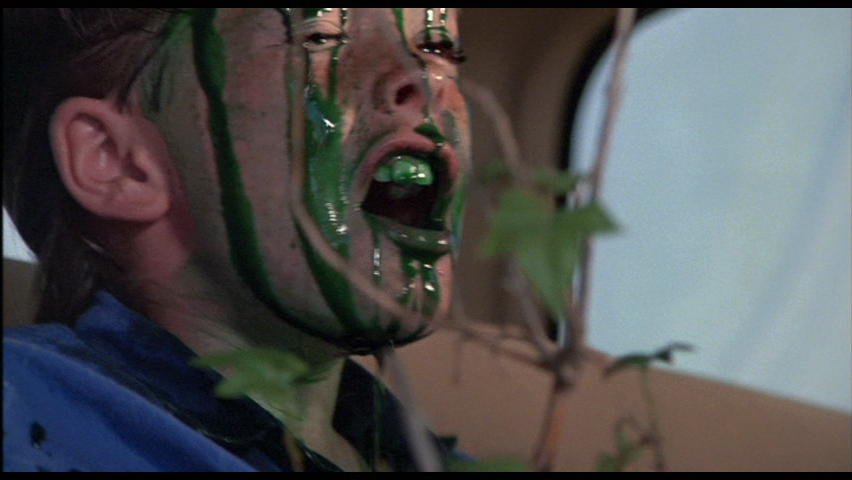
The problem with most horrible low-budget horror/scifi movies is that they're boring, mostly because they take a simplistic story that's already been done (big monster/aliens/slasher). In 'Troll 2' this isn't a problem, because it tells a highly original story. It starts with Peter, a clean cut boy in the 1800s walking through the forest with a tri corner hat (that's what they wore back then). The narrator tells us that fear was sticking to him like dew on leaves, and it doesn't help matters when he stumbles upon some goblins wearing burlap sacks. Peter runs, and eventually runs into a beautiful girl with freckles painted (poorly) on her face. She lovingly gives him some disgusting green goo that he eagerly laps, but then everything goes wrong, as green punch starts pouring out of his skin and the girl with freckles painted on her face turns into a goblin.
We soon find out that the narrator was indeed Grandpa Seth (no need to remember this name, as it accounts for nearly half the words in the movie, usually delivered as 'GRANDPA SETH!!!!!!!! HELP US!!!!!!!!'), who was reading bedside to Joshua from a children's book that looks in one shot to be titled 'Davey the Goblin.' As Joshua is shouting questions to Grandpa Seth about the goblins, his mother knocks on the door and we find out that Grandpa has actually been dead for 6 months, but he still comes to Joshua's room to read him stories (among his other abilities: stopping time, materializing as a person, making molotov cocktails and escaping from Hell for a few minutes at a time). Before he disappeared, Grandpa told Joshua that goblins still exist (this is a key plot point), but his mom tells him that the family is off to spend a month in the country to unwind.
You can probably guess what happens from here on out: the family goes to a town called Nilbog, which is populated by country rubes who are actually vegetarian goblins who trick you into eating their magical forest food, so you will melt into green goo to be eaten by them. There are also many interesting subplots (some not involving a sexual encounter involving a boy, a witch named Creedence and an ear of corn), such as a boy who turns into a plant and Nilbog's friendly Sheriff named Gene Freak.
Keen readers will notice that I did not use the word 'troll' once in my description. This is by design, as the word 'troll' is not uttered once and as far as anyone can tell, 'Troll 2' has nothing to do with 'Troll,' a 1986 movie about trolls (not goblins) invading a San Francisco apartment complex.
Trolling for genius
My simple description may make it sound like 'Troll 2' is undeserving of the accolades I've reaped upon it, but consider the following:
--In one remarkable scene, Joshua's family is set to unwittingly eat some of the goblin food (usually shown as cakes with green frosting, english muffins with green frosting and sandwiches with green frosting). Grandpa Seth to the rescue, advising Joshua 'for the love of God, don't let them eat!' Helpfully, Gramps freezes time and gives Joshua 30 seconds to think of a solution. Joshua doesn't let him down, as he thinks of an obvious answer: pissing all over the green-frosted feast. This leads to a pantheon quote from dad: 'These people are letting us stay in their house, and you can't piss on hospitality! I won't allow it!'
--One moving revelation is that Nilbog is actually Goblin spelled backwards. Goblins are a clever bunch, naming your town 'Goblin' would be much too obvious, no?
--When Evil Preacher Goblin goes against Joshua (molotov cocktail) and Grandpa Seth (fire extinguisher -- 'to cause confusion'), the Goblin condemns Grandpa's spirit to hell. Joshua asks if Grandpa really is in hell, to which he replies 'No! But I know a trick that a friend of mine who went there taught me!' Oh.
--The final battle features Joshua's secret weapon (a balogna sandwich) and his family touching a Stonehenge rock and concentrating very hard (helped by Joshua urging them on with 'CONCENTRATE HARDER!!!!!').
The Legacy
Thankfully, I'm not the only one smitten with this movie, check out the official fan web site, which features lots of good information and even some snazzy t-shirts for sale. Last year in New York City, 'Troll 2' was screened at the Upright Citizens Brigade theater, with most of the cast attending for a Q&A session (videos of this event are on YouTube here and here). As you can imagine, college screenings of 'Troll 2' have helped spur its cult status, as well as MGM's Troll/Troll 2 DVD release. As I said earlier, the full brilliance of 'Troll 2' cannot be done justice by words alone, so please enjoy this extensive clip montage on YouTube, as well as this stylish 'Troll 2' music video and faux trailer.
Saturday, October 07, 2006
HORROR MONTH: DVD Survival Guide
To fill up your month of horror, you will no doubt need countless movies of said genre to occupy your time before the holiday season arrives. If you haven't noticed, horror fans -- maybe more than any other genre -- are entitled to a booty of low-price but high-quality DVDs, often in handy box sets. I've noticed some particularly juicy deals lately, and I will pass the savings on to you, in the hopes that your Halloween movie viewings be that much better.
Fright Pack: Campy Classics ($24.99)
The sight of this box set at BestBuy today actually inspired this column, I couldn't believe such a set existed without my knowledge. Apparently Anchor Bay has a variety of these Fright Packs in other horror genres (check them out here), but this set is easily the most impressive. Encased in delectable lunch box/six pack packaging, it includes Sleepaway Camp (complete trash, as I have explained, but worth owning at this price), Return to Horror High, Transylvania 6-5000, Return of the Killer Tomatoes, Vamp and Elvira, Mistress of the Dark. 'Vamp' is a definite weak link in this otherwise outstanding bunch, but the rest are all quality camp horror. I never even realized there was a sequel to 'Horror High,' but it sounds fun, as does 'Elvira.' 'Transylvania' is a great Halloween comedy with a cast including Jeff Goldblum, Michael Richards and a very young Geena Davis. Thankfully Anchor Bay has priced this right, and it's pretty hard to resist this time of year.
The Nightmare on Elm Street Collection ($45)
This one's been around for a long time, and was an instant hit because it was high quality with a very attractive MSRP ($60), now the price has dropped even more, and even though I'm not the biggest 'Nightmare' fan, I just may have to pick this one up now. Originally released as nothing more than a display box with all the regular DVDs inside (as well as the extras DVD), it has apparently been re-released in more elegant packaging with slip cases for each movie (whose spines combine to form a nice pic of Freddie on one side of the box). No luck in finding a picture of it online, but it looks very sharp and it even comes with 3-D glasses for 'Freddie's Dead,' as well as an extras disc loaded with goodies. If only this much care was given to the whoop-dee-shit Friday the 13th: From Crystal Lake to Manhattan set, which puts two movies on each disc and offers little in the way of extras.
The Val Lewton Horror Collection ($50)
A very impressive (and popular) set that gives you nine genuinely chilling horror classics. I haven't seen all of these, but from what I've seen of Lewton, I really need to buy this one. I saw The Leopard Man and The Body Snatcher earlier this year and really got into both of them, The Leopard Man in particular. While uneven as a whole, 'The Leopard Man' has a few scenes that will still scare almost anyone, notably a scene in a cemetery that I will touch on later this mont. Lewton was a prolific horror producer, with Cat People being his best known work. For $50 this is a great buy and a slice of horror that any fan of the genre should check out.
Frankenstein, Dracula: The Legacy Collections ($20 each)
Universal outdid everyone's expectations when they gave the 'Legacy' treatment to all their monsters two years ago (in celebration of, ugh, 'Van Helsing'). You can probably stand to pass over the sets for Creature and the Invisible Man, but these two are essential. Not all of the 5 movies included in the sets are exactly worthwhile, but in Dracula's case you get the Bela Lugosi classic, but also the Spanish version -- filmed on the same set as the English version, but some consider the Spanish version superior in ways because they were able to observe the English filmmakers and see what worked and what didn't. Frankenstein's Legacy series is a must-buy if only for 'Frankenstein' and 'Bride of Frankenstein,' the latter being one of the greatest sequels ever made, enriching the character and offering a superior story. It's for these reasons that you should take the Legacy series over the recently-released 75th anniversary editions of Dracula and Frankenstein, which have remastered quality but not the broad appeal of offering multiple movies for only $20.
Various Double Feature DVDs ($7-$10)
You can still find a lot of trashy/camp horror on double feature DVDs, which usually means there's one quality movie on it. The best example of this I found was a Tales From the Crypt double feature with Demon Knight and Bordello of Blood on it. While 'Demon Knight' is one helluva bloody good ride (a sure bet to please everyone at a Halloween party), 'Bordello of Blood' has Dennis Miller and nothing else. Same goes for Poltergeist II/III, the former is an underrated chiller while the latter is unintentionally hilarious throughout, only you feel bad laughing because the little girl who played Carol Ann died during shooting.

Tuesday, October 03, 2006
HORROR MONTH: Kids can be so cruel
I'm trying to make October into horror month here on DVD Panache, which means I am committing to posting more than I did in September. Since Horror Month is in its infancy, I will begin it by taking a look at the younger creations in horror movies, specifically the kids who have made life a living hell for some unfortunate souls. (Note: Stereotypical youthful horror characters -- Children of the Corn, Poltergeist, Exorcist, et al -- were mostly avoided for your protection.
John and Pearl (The Night of the Hunter)
The original lil' basteds paved the way for countless other tikes who would foil the villain in the end. Like I am known to say, 'Hunter' is truly one of the greatest American movies ever made, and certainly one of the all-time bests in the horror genre -- but that's for another post (possibly this month), because what we're focusing on here is its child stars. After their father is hanged for robbery, only John and Pearl know where he hid the loot. They never planned on having to contend with Robert Mitchum's Rev. Powell, a terrifying creature who believes he is doing God's dirty work. After resisting Powell's inquiries about the money for the first act, the action really kicks up when the children set a trap for him in the basement and escape on foot. In a shot that would be repeated in countless slahser movies decades later, John and Pearl just barely escape into a boat, just as Powell sinks into the mud, his prey just beyond his reach. In a ploy that would again be repeated in horror movies, Powell's character never tires -- seemingly getting stronger as the chase goes on. In a movie full of polarizing shots, we see John waking up in a barn -- apparently safe -- only to see the silhouette of Powell riding a horse on the horizon (singing a creepy hymn), to which John wonders, 'don't he ever sleep?'
Miles and Flora (The Innocents) Maybe the most chilling of any black and white horror movie, 'The Innocents' remains the prototype of subtle terror, and still one of the most eerie portrayals of ghosts ever seen on screen. When Miss Giddens (Deborah Kerr, who recently turned 85) takes the job of governess at a sprawling estate, she doesn't count on the former masters of the house still having a hold on the grounds, and it doesn't help matters when the two 'innocents,' Miles and Flora, insist she's crazy. The first times we see a spirit, it's merely a shadowy figure atop a tower -- but we get better and better glimpses of them as the movie goes along, and apparently Miss Giddens is the only person to see them. One of the first horror movies to use the invincible nature of youth, whereby an adult has to keep themselves from simply slapping around a child.
The Children (Village of the Damned) While 'The Innocents' focused on the seemingly pure nature of children, 1960's 'Village of the Damned' twisted the imagery of innocence to create an all-new monster. An extremely low-budget production, 'Village' is set after everyone in a small English hamlet falls unconcscious for some strange reason. After they awake, all the women are pregnant, and give birth in rapid succession to blond children with piercing eyes. The group of children do everything together, and their powers of persuasion soon become apparent. An obvious metaphor of conformity and loss of individuality, 'Village' is a powerful monster movie because its villains are unflinchingly evil and horrifying. In addition to the hypnosis eye effects, all the kids are voiced by adult actors, giving them a hyper-intelligent and eerie nature. Like many great horror films, no explanation is given for the evil phenonmenon (unlike John Carpenter's inferior remake).
Charlie (Firestarter) Parents just don't understand, especially when their participation in a government experiment gives you the supernatural power to create fires. I hate it when that happens. Drew Barrymore and her dad (piss poor telekinetic) are captured by the feds who hope to turn her powers into WMDs ('Send in the little girl!'), but when things get nasty, watch out. This movie is pretty boring up until the end, which seems to have used about 80 percent of the budget. Charlie (Barrymore) finally realizes that if she wants these government types off her trail for good she's going to have to get mad, and you won't like her when she's mad. After a lifetime of lighting hay on fire and boiling water with her mind, Charlie gets wise and starts creating fireballs and generally makes things go boom. Perhaps even scarier than Barrymore's character is that the movie tries to pass off George C. Scott as a Native American sniper.
Monster Squad (The Monster Squad)
Again, this gem is still unavailable on DVD, this remains the best youth-empowering horror movie to date (as in, if the monsters come, only kids will know what to do about them). Watch as Horace slaps Dracula with a garlic-heavy slice of pizza or when he rips a shotgun out of a dead policeman's hands and lays the Creature to waste. Be amazed with the most ingenious disposal of a mummy ever conceived (he's literally nothing without those bandages) and some of the most brutal treatment of a werewolf (not just a kick to the 'nards,' but a stick of dynamite in his belt). These kids know how to get it done, and can only laugh when the army finally shows up at the end, prompting this wonderfully predictable ending dialogue: 'Who are you kids?' 'We're the Monster Squad.'
Note: The above picture is actually yours truly in 2nd grade, clothed in my most successful Halloween costume

Monday, September 18, 2006
Recent Viewings

Football season has taken its toll on my posting frequency, but my movie intake has remained steady, and I've seen some interesting ones of late.
Jackson County Jail
I don't remember how I heard about this curiosity, a Roger Corman-produced injustice-on-the-run yarn starring a young Tommy Lee Jones. I think I might have stumbled upon the one-sheet (see above) at some point, which is one of my favorites (love the wonderfully simple tagline: 'What they do to her in Jackson County Jail is a crime'). But the poster really doesn't show what the movie is about. Hollywood career woman Dinah (Yvette Mimeux, who had a prolific career in made-for-TV movies, including Outside Chance -- a remake of Jackson County Jail made in '78) is driving cross country when a hippie couple jacks her car; after trying to find help she is booked on bogus charges and held overnight in the jail because all her identification was left in the car. In the next cell is Coley (Jones), a lifetime criminal who doesn't bat an eye when a guard rapes Dinah, but springs to action after she accidentally kills him. The unlikely pair escape, and the final act is Dinah (unconvincingly) falling for Coley as they fend off the man. It's a fun little crime movie, and Jones' role helped launch a succession of tough hombre roles, as he steals the show as the don't-give-a-fuck Coley (who remarks 'I was born dead' near the end when Dinah tries to keep him from shooting it out with the cops.
The Big Country
In the late 50s, Westerns had been pumped through theaters at a manic pace for decades, and by then you needed to break from the traditional formula to really catch the attention of audiences who had seen every kind of Western. 'The Big Country' is a bit of a revionist Western, mixing modern and Old West values, and manages to be smart, gorgeous and entertaining despite having a lack of action by design. Gregory Peck plays Jim McKay, a retired sea captain who comes west to meet his bride's family. He finds himself in the middle of a bitter, generations-long land dispute between two cattle empires. McKay's naval sensibility is a stark contrast to what is valued on the stark plains of the midwest, as men are expected to prove themselves or risk being labeled a coward if they back down. McKay sees no point in the feud, or why he is suddenly despised for not wanting to engage in pointless fights. The fight McKay does get involved with is to convince both sides that there is a diplomatic solution to all their problems, and it leads to a surprisingly tense ending with one of the most original duels ever shot.
This engaging story is played out with wondrous images of a West not often shown on film: endless plains that make for a near-claustrophic feel, far away from any laws or civilization. Peck is perfect as the East Coast pacifist and one of the main setpieces is a gargantuan ranch house which is home to unending elegance in the middle of the rough, spartan country around it. Before Sergio Leone and Sam Peckinpah ushered the Western genre out with their epics, William Wyler made a brilliant, atypical Western entry that has aged well.
Kicking and Screaming
No, not the Will Ferrell version, but a genius Noah Baumbach comedy from 1995 that I had never heard about until Criterion gave it the treatment last month. It's a deadon satire/examination of the modern college experience, where getting a first-rate education drops a brickload of career expectations on many unwilling to carry them, leading to the dread of graduation. The film opens at a graduation party and Baumbach delivers an assault of witty exchanges that are all drop dead hilarious and honest. The rest of the movie doesn't quite measure up to that bullseye opening scene, but it's never easy to turn away. Eric Stoltz plays perhaps the best Eric Stoltz character ever seen: a 10-year senior who's content to work at a campus bar and pass his useless knowledge on to those he can help. Our core group of characters went through college together and are making the most of post-poning their entrance into the 'real world' by sticking around campus another year, sharing in the many things they hate. I thought of this as a college version of Dazed and Confused, and its value is enhanced by being made in '95: no cell phones or Internet talk, and maybe the best satire of video rental chains when they were at their absolute peak (college-educated employee is asked: 'Do you have "Dr. Giggles" in letterbox?').
Note: It's interesting that the Ferrell movie of the same name was apparently able to go by that title by substituting an ampersand intstead of the 'and.'
The Gate
This was a mainstay on late-night HBO for a time in the late-80s, though I never saw the whole thing until recently. The idea of kids finding a hole that apparently leads to hell in their backyard always scared me as a kid, as did the creepy little monsters that crawled out of it (think flesh-colored tiny T-Rex's with the face of a bulldog). It's a cool premise, but a very dull and dumb movie that is redeemed only in the fact that it strangely tries to be a 'kids' horror movie (it's PG-13). When a very young Stephen Dorff (who gets first-billing) finds a big hole in his backyard after a tree is uprooted strange things start to happen: moths start flying around his window, his dog dies, his friend has a dream about his dead mother, his parents leave for the weekend . . . I mean this is some really weird stuff, what could have caused it? Luckily Dorff's friend has a heavy metal album which explains everything, leading to a shocking climax of little bulldog T-Rex's, kids getting stabbed with Barbie dolls and the universe being saved by a well-placed model rocket. The End . . . until The Gate II: Trespassers.
Black Christmas
Forgotten as one of the original slasher movies, and THE original 'the call is coming from inside the house' movie (four years before When a Stranger Calls), 'Black Christmas' is an occasionally creepy, disappointingly bland horror movie. It starts out with great promise as we're shown a sorority Christmas party (your hostess: a very drunk Margot Kidder) and the camera is soon creeping up to the house through the eyes of a killer. We see in first-person how he sneaks into the house and stalks his prey. I was excited at the prospects of the whole movie taking place at this party, but instead after one measly kill the rest of the movie bumbles around as campus security tries to figure out who murdered the girl and who keeps making these threatening phone calls to members of the sorority. By the time any kind of suspense is built up at the end, the big twist (where the phone calls are coming from) is painfully obvious, but the movie is somewhat saved by the chilling ending, which gets a 9.5 from this judge.
Friday, September 01, 2006
John Carpenter's Decade

When you think of directors who defined what movies in the 1980s were, it's easy to imagine Spielberg, Hughes or even Landis -- directors who just had a great run of movies that still define that decade. But in my mind, the director who had the most impossible run of movies in the 80s is John Carpenter. It may not have seemed like it at the time, since none of them had much success commercially (save for Escape from New York) or critically (save for Starman), but taken as a whole today, taking into account how well nearly all of them have aged and the enduring popularity they have enjoyed, Carpenter's body of work in the 80s has never received the acclaim it deserves. In this quick rundown of his 80s movies, the general theme I see is tha the took on outlandish projects that probably didn't look too good on paper, or that other directors would have needed a much bigger budget to pull off.
1981: The Fog
After the hugely popular Halloween in 1978, Carpenter of course had to produce another atmospheric thriller, and he wisely took this project in another direction instead of making another stalker/slasher movie. In what would become a common theme in his films, 'The Fog' has a supreme beginning, with a creepy old man telling kids around a camp fire about the secret which has haunted this small Northern California town. Like 'Halloween,' the story is light (ghosts wanting revenge), but the combination of Carpenter's trademark pulsing synthesizer score (always composed by himself) and special effects that hold up well today make 'The Fog' a fine thriller (especially THE shot at the end, which is a great payoff). In the early stage of a decade that was mad for horror/slasher movies, 'The Fog' more closely resembled the Val Lewton horror movies of the 1940s, which had few genuine frights but kept an uneasy feeling throughout the film thanks to a delicately creepy mood and setting.
1981: Escape From New York
With 'Escape,' Carpenter went back to the action/scifi genre that got him his early start in Hollywood with small budget wonders Assault on Precinct 13 and Dark Star, but with this project he would have a budget likely bigger than all of his other films put together. What makes 'Escape' work is an approach Carpenter would make famous throughout his career, with slightly-tongue-in-cheek stories of unapologetic action combined with excellent shot composition and of course his trademark in-house score. This was actually his second collaboration with Kurt Russell, after the 1979 TV movie Elvis, and Carpenter would use the shaggy-haired actor like no one before him. Since he was a child, Russell was cast in Disney movies as a loveable oaf or aw-shucks bumbler, but Carpenter awakened the John Wayne persona inside Russell (which he would use in roles much more frequently from now on) to become the kind of anti-hero 80s audiences so loved. Russell is death row con Snake Plissken, given 24 hours to infiltrate the prison that is New York to save the president after his plane crashed -- or die from the virus recently injected into him from the government. It's a ridiculously Carpenter plot embraced to great effect by the director. 'Escape' was made ageless by Russell's character, as well as the performances by an aging Lee Van Cleef and even Isaac Hayes.
Note: I had a strange encounter in college with a classmate with the last name of 'Plissken': I jokingly asked him if he ever went by the name 'Snake,' and he replied that his actually father went to college with Carpenter and somehow developed the nickname of 'Snake,' which Carpenter of course used to name the character.
1982: The Thing
Carpenter's manic run in the early 80s continued with this remake of the influential 1951 scifi thriller The Thing From Another World. The original film featured scientists thinking their way through a seemingly-invincible foreign foe. Like the original, Carpenter's version would have a remote setting (in this case: Antarctica) and the scientists would stumble upon a UFO of sorts under the ice, but from then on Carpenter's version would go in its own direction: instead of simply being a big brute, the villain would be a shapeshifter, leading to a continuing fight to find out which one of the scientists is really the alien. Again, Russell would be doing his best modern John Wayne impersonation, but he would be upstaged by the special effects, which are shockingly realistic even by today's standards. The outlandish one-liners that were always prevalent in Carpenter's movies are on display devlishly here, capped by Russell's great one at the end: 'Yeah, fuck you too!'
1983: Christine
Another interesting fact about Carpenter is that he made a lot of monster movies ('Halloween,' 'The Fog,' 'The Thing,' 'Prince of Darkness') and that his villains in those movies never had any lines of dialogue. 'Christine' is a perfect example of this, with a possessed '58 Plymouth Fury as the villain. Probably not the best follow-up to the masterpiece that was 'The Thing' (undoubtedly his best movie outside of 'Halloween'), 'Christine' was another example of how Carpenter could push the special effects envelope with a modest budget. After Christine is smashed up, we get a great scene of the car fixing itself, acting as some kind of motorcity T1000, and the effects are flawless.
1984: Starman
One of Carpenter's best-known and most popular movies, 'Starman' went outside his realm of fantasy/action/horror to offer a touching scifi romance with religious overtones. Jeff Bridges was nominated for an oscar for the title role, and Karen Allen was perhaps never better in what was realistically her last quality role of her career. 'Starman' would mark Carpenter's last movie that had truly widespread appeal, outside of the niche audiences that craved his brand of mysticism and horror.
1986: Big Trouble in Little China
For me, this is the 80s. A completely satisfying movie that would never have gotten made in any previous or future decade. I loved this flick so much as a child that I even went so far as to use my family's lone home movie as to record it off HBO (thankfully I only got through the opening credits before I came to my senses). I think of this as Carpenter's Indiana Jones movie, and if Russell was in the John Wayne role in previous Carpenter movies, he IS Wayne in BTLC, going so far as to adopting a mock-Wayne accent throughout the movie. In the DVD commentary, Carpenter remarks that it was originally designed to be a Western, which I think would have been amazing to see, although the costs would have been much higher. As it is, BTLC is the kind of buddy/action/kungfu/Chinese magic movie that rarely comes along. The entrance of the Three Storms has to rank among the best ever, simply because it is completely unexpected and is done with almost no dialogue (save for a few grunts and screams). When people see BTLC for the first time these days, it's easy to mistake it for satire, yet the reason it succeeds as much as it does is because the film is played straight and never once blinks. When Egg and David LoPan are facing off in a black magic video game while a small scale war plays out behind them -- you believe it!
1987: Prince of Darkness
This is probably Carpenter's most forgotten movie of the 80s, but it's one of my new favorites after seeing it recently. Basically Carpenter takes the premise his 'Assault on Precinct 13' and adds some Catholic mythology and makes Satan himself the main villain in what ends up being quite an effective little thriller. When a priest dies, he leaves a key to a door in a condemned ghetto church that unlocks the mystery of the ancient Brotherhood of Sleep, a secret society dedicated to the fact that Satan was captured sometime around the time of the crucifiction. The Ultimate Evil is housed in a cylinder and represented as a swirling green mass, which is itching to get out. For one night, a professor (Victor Wong!), a priest (Donald Pleasance, again playing a character named Loomis) and some college students set out to decipher just what is inside the cylinder and how it got there. All through this, some freaky homeless people (lead by Alice Cooper) are drawn to the church to defend the cylinder and all those inside keep having the same dream, which appears to be a video transmission from the future. It all plays out in true Carpenter fashion, with a typically moody Carpenter score. It's a great concept that gets very tense at the end. Also, if you get the DVD, be sure to watch the trailer -- which seems to go out of its way to spoil the ending like no other trailer I've seen.
1988: They Live!
Carpenter closed the decade with a concept that would later be repeated with The Matrix, but one that ultimately found a small audience at the time. This would mark the end of Carpenter's freedom from studios, which allowed him to essentially choose his own scifi/horror projects. This is not to say 'They Live!' isn't good -- it's lots of fun, and has aged well -- but it's also perhaps too silly for its own good (due in no large part to the casting of Roddy 'Rowdy' Piper in the lead role). When the drifter Nada (Piper) finds a pair of sunglasses in a garbage can, he is able to see the world as it really is: a portion of the population are really aliens that are controlling the masses. Piper and a group of other misfits set out to bring down the system, and along the way he has an infamous fist fight in an alley which was given great tribute by South Park a few years ago (it is choreographed punch for punch from 'They Live!').
Closing: Carpenter was able to put his own personal stamp on all his films, literally -- his title cards almost always bore his name, usually with the same font (see here and here). The projects he chose were not for the paycheck, but because they would further his own unique talents with special effects and scifi/fantasy storytelling. You could argue that after the success of 'The Thing' and 'Starman' he could have become a more mainstream director, but as it is after 'They Live!' he was given one more legitimate mainstream movie, the forgettable Memoirs of an Invisible Man. Its subsequent box office failure sent him down a road of movies that, while probably closer to Carpenter's style (the ill-fated run of Escape from L.A., Vampires and Village of the Damned), they never caught on in the way his earlier movies did. But for a magical eight year run in the 80s, Carpenter found himself in the right time for his particular brand of cinema, and the films he produced in those years are still popular with those who are just now discovering them.