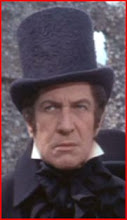
You know 'em. You're watching a movie with a crowd of people and cannot for the life of you figure out what the hell is going on. You want to ask someone, but wisely choose against it in fear of them pointing out your ignorance. There are some movies so rediculously hard to follow that you eventually just stop trying ('The Big Sleep'), others that are clearly not supposed to make sense ('Beyond the Valley of the Dolls') and some that are just so damn weird and inconsequential you don't even know where to start ('Orlando'). Here's ten of my favorite 'WTF?' movies, but only one of them is actually a bad movie (you'll see).
10. Miller's Crossing
This is perhaps the only movie I've seen where I loved every minute of it, yet I only understood about three of said minutes. Miller's Crossing drops you right in the middle of a complex mob prohibition plot. It feels like you wandered into a party where you only know one person, and they're discussing thermo dynamics in Mandarin Chinese. None of the characters are really introduced and while you're trying to dicypher just who the hell everybody is and what their relationships are, people are getting double-crossed and killed. But boy is this one hell of a movie. The Cohen Brothers put together a visual fiest soaked in Irish whisky (which is either being poured or drunk in every shot). At the end I was smiling but had so many questions: What exactly was Gabriel Byrne's job? Was it supposed to be tongue-in-cheek? If not then how could Albert Finney blow up a car 100 yards away from him with a Tommy gun?
9. Blow Up
Gorgeous depiction of the mod scene in 1966 London, Blow Up is full of camera tricks and lots of did-you-really-see-that? questions. When he's not photographing models and rolling around on the floor with naked teeny boppers, Thomas takes pictures of random people and generally acts like a rich, British jackass. No matter, one day he takes pictures of a couple dancing at the park, or were they? Upon closer inspection, there was a dead body in the background. Or was it? He gets a visit from the woman in the picture (or was she?) who wants the pictures back, or does she? It goes round and round as Ratt once sang until finally Thomas goes back to the park, watches some mimes play tennis and then literally disappears (WTF??!!) It does contain one of my favorite scenes, when Thomas goes into a club where the Yardbirds (complete with Jimmy Page and Jeff Beck) are playing a reworked version of 'Train Kept a Rollin' while an audience full of young hipsters are observing without emotion or any movement.
8. Dark City
One of my favorite movies, but Dark City makes the list because, like 'Miller's Crossing,' it does its best to confuse its audience in the early going. The brilliant ploy is to make the viewer just as confused as the main character, who knows nothing about the environment he was just born into. We learn about what's happening at the same rate as John Murdoch does. It's easy to get frustrated with this movie, it's also possible to see different aspects of it even after 20+ viewings, like me. But there can still be parts of it that are confusing even after so many viewings: How did Walenski 'wake up,' and why did his character not change every night? Why exactly did Murdoch get the ability to tune?
7. Beyond the Valley of the Dolls
Go into your kitchen, fill a bowl with peanut butter, vodka, cloves and cumin, beat on high for two minutes, dump it on a lawnmower then unload a few hundred rounds from a Browning Machine Gun on it. This is the closest physical representation you can get of how random, weird and maddening Beyond the Valley of the Dolls is. One of the first regular budget films Russ Meyers made, 'BVD' concerns a group of models who compose the band The Carrie Nations and their subsequent trip to Hollywood in search of riches. While there they find themselves corrupted by the weird hipsters they party with and end up in a mess of heads rolling on the floor, a murderous tranny who wishes to be called 'Supergirl' and a narrator who seems very out of place. Even stranger than the story is the style of Meyers, who seems to cut each shot about two frames before he should, which ends up looking more bouncy than some of the movie's characters.
6. Blade Runner (Director's Cut)
Not to brag, but I am one of the seemingly few who 'got' the new ending of Blade Runner. No, the oragami was not in the shape of a unicorn by accident. Yes, this new ending does kick ass. For those of you who already knew this, congrats, but I have watched this movie with enough people who had no freaking clue what the oragami meant to warrant its inclusion in this list. For directors wishing to have a 'gotcha' ending without ramming it down the audience's throat (I'm looking at you, M. Night Shyamalan), take note.
5. Orlando
This is a movie that either makes you seriously question your intelligence or simply question your imagination of how incoherent a seemingly good movie could be. Here's a cliffnotes version of Orlando: Girly-looking boy Orlando is told by Queen Elizabeth I to stay forever young and he takes those words a little close to heart. Somehow this young man does not age, but one day something even weirder happens: he wakes up and discovers that he has become a woman. She, still named Orlando mind you, goes through time experiencing all the trials of a woman (such as hearing 18th century aristocrats talk about how women aren't that smart) until finally she gives birth to a daughter in the 20th century then looks up in the sky and sees an angel that looks like herself. Credits roll. Yup, that's it. Somehow I managed not to throw my shoe at the screen.
4. Blue Velvet
Luckily, I limited this list to just one movie each from weird-masters David Lynch and David Cronenberg, otherwise this list would be entitled 'Top Ten Lynch and Cronenberg Movies,' they only make 'WTF?' movies with very little exception. Blue Velvet is my choice for Lynch. Sure, Eraserhead would have been a good pick too, but I like 'Blue Velvet' as Lynch's top 'WTF?' movie because it lures you into thinking it is actually a semi-normal movie. It starts out with a young Kyle McLachlan trying to find the owner of an ear he found in a field (we've all been there), before the plot quickly devolves into a nice blend of sadomasochism, kidnapping, Pabst Blue Ribbon, Candy Coated Clown and some affection for blue velvet. You don't think it could get any weirder after seeing Dean Stockwell do karaoke for a tearful Dennis Hopper, then you Dennis Hopper after a few hits of gas, then gain a new understanding for what a 'love letter' is before finally wondering what happened to that nice story about a boy searching for the owner of an ear.
3. Naked Lunch
There's a great 'Simpsons' gag where Bart and his friends gain fake IDs and promptly go to see Naked Lunch thinking it's a T&A flick, when they leave, Nelson remarks 'I can think of at least two things wrong with that title.' For anyone who has seen 'Naked Lunch,' this is probably the funniest line ever uttered. 'Naked Lunch' is the simple story of Bill Lee (Peter Weller) who is an average exterminator, except his wife is addicted to sniffing his roach powder, giant bugs start talking to him, he kills his wife in an attempted William Tell game, heads to Inter Zone, types reports on a typewriter that is also a large bug that talks to him, dabbles in the centipede drug trade, watches his bug typewriter eat a rival bug typewriter, chases a dominatrix maid to South America only to discover that she is really his doctor who is running an alien goo drug racket before finding his wife alive and then promptly killing her again. I mean, 'Naked Lunch' is just chock full of Hollywood cliches you see in almost every movie. 'Naked Lunch' is probably a pretty fine movie if you know anything about William Burroughs (which I do not) or if you like bugs alot (which I do not).
2. 12 Monkeys
I know, you completely understand 12 Monkeys, I thought I did too, until I tried to read this analysis of the temporal anomalies contained in the movie. Just try comprehending the seven different timelines outlined in that article before feeling dumber than your average Blockbuster employee.
1. The Big Sleep
There are many movies stranger and weirder than The Big Sleep, but there may be no movie with a less confusing and complicated plot. Although it is a truly great movie, you will dump your tub of popcorn on a loved one trying to figure out just who Sean Regan is, why (or if) he was killed, why the chauffer was killed, why the villains seem to keep switching sides and what for the love of god is Lauren Bacall's character really up to? It is nearly impossible to keep up on first viewing because the main character (Regan) is never seen and many of the biggest moments in the plot also happen off-screen. Nevertheless, there is an easy to follow love story between Bogart and Bacall that keeps this train rollin, along with some of the best Bogart dialogue you'll ever hear ('She tried to sit on my lap while I was standing up'). If you haven't seen it, just accept the fact that the plot has befuddled millions and you'll be the next.
Monday, October 17, 2005
Top Ten 'WTF?' Movies


Wednesday, October 12, 2005
Recent Viewings
Thought I'd give some updates on some of the recent movies I've seen, which have shuffled through the "Last 5 watched" list on the right.
'The Osterman Weekend'
I was interested to see this as it is Sam Peckinpah's final movie. Probably my favorite director, Peckinpah's films all had the same theme of characters who were pushed to the edge by double-crosses and back-stabbing until finally they said 'screw it, I'm doing it my way.'
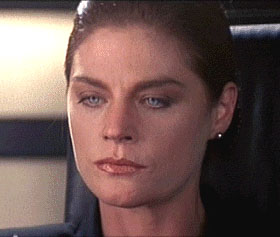
'Osterman' is no different in this respect and has a great cast of a young Rutger Hauer (a rare non-psycho role for him), Craig T. Nelson, Dennis Hopper and Burt Lancaster. You even get to see Meg Foster, who is best-known as one of the main characters in They Live, as well as having the freakiest eyes you'll ever see.
'Osterman' centers around John Tanner (Hauer), an investigative journalist who thinks he may have landed the story of his life when CIA agent Fassett approaches him and tells him of three suspected Soviet spies living in the U.S. Just one catch: they're three of John's friends who are coming over for the weekend. In exchange for Fassett coming on his show, Tanner must help turn his friends over to our side. What follows is a tense, emotional couple of days where the true intentions of Fassett are revealed.
'Osterman' holds up well because a large part of the plot is how television can manipulate the truth. Hauer and Nelson are fantastic, but I thought the movie was too short to really flesh out the overly-thick plot (adapted from the Robert Ludlum novel), which gets very confusing.
'Targets'
This movie also falls in the class of an older film that would resonate more with audiences today than when it was originally released. Peter Bagdonovich's first real turn as a director, 1968's Targets blew the doors off conservative America with a story that seems a little too realistic today.
Bobby is a clean-cut young man who, along with his wife, live at home with his parents. His existence is pure starched collar and TV dinner: he calls his dad 'sir,' is told by his mom not to stay up too late and lives in a house with nary a crumb on the floor. But Bobby also has a cache of guns in the trunk of his Mustang convertible and a brooding anger that just won't go away. One day, Bobby kills his wife and family, then heads to a water tower so he can pick people off on the freeway. His night won't be over until he heads to a packed drive-in and continues his marksmanship from behind the screen.
The other story in 'Targets' concerns the character Byron Orlock, a fictional horror actor played by Boris Karloff. Orlock is attending the drive-in that night as the premiere for his final movie and he will have a great deal to say in how Bobby's night ends.
What I liked most about 'Targets' was that there was no attempt to explain Bobby's actions. I read a synopsis that said he was a Vietnam vet but saw no evidence in the film. When he is hauled away by police, the only thing he can say is 'I barely missed!' Bagdonovich takes great care to show that Bobby appears as a wholesome person (he even packs himself a sandwich and Dr. Pepper to have on the water tower). Audiences in 1968 were probably by such a frank depiction of random violence, but viewers today would see it as reality, since such violence is depicted regularly in the media.
'Billy Jack'
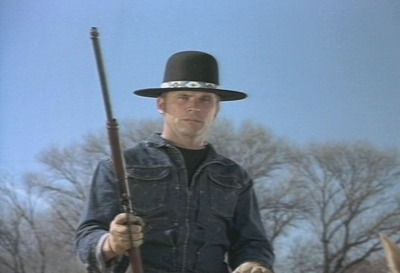
This was a nice surprise for me. I had little experience with anti-authority, pro-pacifist hippie movies, but this has to be one of the best. Billy Jack tells the story of its title character, a half white, half Indian ex-Green Beret who protects an Indian reservation and a liberal school located on it. The townies aren't too fond of the Indians, and when they try and push them out of their ice cream shops, Billy Jack is there to unleash some kung fu justice on them.
While there's plenty of action in it, 'Billy Jack' is still a hardy anti-violence movie because the Indians do not fight back as they know they cannot win and while Billy kicks his share of ass, he quickly discovers that it is a fruitless fight.
The uneasy tensions in this Arizona town come to a head when a hard-ass policeman's daughter runs away to the school on the reservation and falls in love with an Indian boy. Bad news. While trying to protect their newest student, the Indian school also tries to be accepted by the square townies, who view them as long-haired hippies.
The Indian school specializes in dramatics and actually much of the film was filmed via improvisation, giving it an even more realistic feel. Look for a young, shaggy Howard Hesseman as one of the school's performers.
'The Bank Dick'
Another nice surprise, as it was tragically my first W.C. Fields movie. It's amazing to think that Fields died two years after this was made, in 1942, because he seems so vibrant and lively in The Bank Dick. .
Watching Fields, it's easy to see the comics that have been inspired by him. The most obvious is Stephen Root's character Jimmy James on the much-loved sitcom 'News Radio,' it's almost a carbon copy of Fields' trademark bumbling annoying ways.

Monday, October 03, 2005
'Not Until the Point of Dying'

You know a movie is intensely personal to you when you feel the need to defend it whenever possible. That happens to me a lot with Once Upon a Time in the West, which is often mislabeled as slow, confusing or inferior to The Good, The Bad and The Ugly. Those descriptions could easily be true to many people, but for me 'OUTW' is a Western opera if there ever was one, a movie that should not exactly be compared with 'GBU' but rather paired with it, as they parallel each other and could be described as pseudo-sequels. When scanning through The DVD Panache Library, my eyes always stop at 'OUTW,' as watching it is such a rewarding experience no matter how many times I've seen it.
After Sergio Leone made the international smash hit 'GBU,' he naturally had to make a follow-up, and this time his ultimate vision of a Western would be put on film. His cast would be comprised of both well-known American actors (Henry Fonda, Charles Bronson, Jason Robards) as well as actors from his native Italy (Claudia Cardinale, Gabriele Ferzetti), the drawn out closeups from 'GBU' would in even fuller force this time around and the biggest leap forward from 'GBU': it would be filmed on location in America.

'OUTW,' like 'GBU' and also Once Upon a Time in America, is a tribute to the American West. Even though he was Italian, Leone saw the potential for epic filmmaking by setting stories against the background of events such as the Civil War, the Westward expansion and the early 20th century. Beneath its adventurous story, 'GBU' has a commentary on the paradoxes of war while 'OUTW' looks at how the railroad pushed aside the Old West canons that Leone cherished in his early movies.
The opening of the movie is perhaps its best known scene. It's amazing to think that a nearly silent scene of three bandits waiting for a train could be this entertaining. The creak of a windmill and the rhythm of dripping water create the opening score, while the audience gets extended introductions to the criminals who are living out the last minutes of their lives. What I love about this scene is how ugly the train station looks. There is no freshly-laid timber here like in other Westerns, rather it is old, weather-beaten and seemingly on the verge of collapse.
The story concerns a quiet stranger who comes into town on a train and how he destroys the perfectly laid plans of two dastardly barons. As in 'GBU,' there are no 'good guys' in this movie, rather a couple are a few notches less 'bad' than the others. For every character in the movie, none of their visions of grandeur takes shape, except for Bronson's character who merely wanted one man to feel the pain of all of his victims.

Cardinale's Jill arrives on a train to wed a soon-to-be-rich family man who sees the potential of the approaching railroad. Though his land is in the middle of nowhere, it has the only water source for miles, in the exact spot where the train is coming through. But Jill never sees the McBain family again, because they are brutally killed by Frank (Fonda) and his gang as they are setting up a picnic for her arrival. Frank, together with the railroad baron Morton (Ferzetti) planned to strongarm the family estate away, but they didn't count on Jill having legal ownership of the plot since she and Brett were secretly married in New Orleans before she made the trip out west.
Matters are further complicated when Bronson's mysterious character arrives. Known only as "Harmonica" because of his musical instrument of choice, Harmonica comes to town seeking vengeance on Frank for all of his victims in his earlier years.
The last side in this twisted triangle is Cheyenne (Robards), a bandit who just escaped his captors and is looking to benefit in some way from all the double-crossing that is sure to go on.
It is an intricate and at times confusing plot that is wrapped up in cinematography and a score (believe it) that rival GBU. Yes, I said the score is better than the legendary GBU 'wahh wahh wahh.' While Ennio Morricone's classic riffs for GBU are more widely recognized, I prefer the more diverse themes in OUTW, which are more varied and seem to fit their respective characters perfectly. Leone thought so much of Morricone's score that at times he 'set' the movie to his notes. There is a scene of Cheyenne riding off and his horse's steps are right on cue with his theme's tempo. George Lucas famously used this technique in The Empire Strikes Back when the Milennium Falcon is leaving Cloud City (the laser blasts are set to the score).

The cinematography takes on a life of its own not only because it was filmed in the famous Monument Valley in Utah where John Ford shot many of his films, but also because of the perfect sets. Leone's Wests are rough, decaying visions and OUTW does not disappoint in that department. The roadhouse where Jill meets Cheyenne is no saloon, rather it's closer to a barn than anything. Brett McBain's estate is imposing but certainly no mansion and Frank's gang's hideout is literally a cave.
There isn't too much dialogue in OUTW by design, Leone always wanted his characters' faces to do the talking, and they have a lot to say. This is the reason for the shockingly high amount of closeups, especially of Bronson and Fonda. Many viewers are turned off by this technique, but to me the eyes of these two actors say more than their mouths ever could. Fonda's baby blues were always the picture of wholesome America before Leone got ahold of him and filled them with unrelenting evil. Bronson's steely green eyes show a broken, driven man who will only be satisfied with the death of Frank.
But the most vital character in OUTW doesn't even get a credit: the railroad. In every scene we see Morton's locomotive there is a distinct steam engine sound that sounds like it is breathing. Leone used this to convey the animal nature of the railroad at the time, how it was gobbling up the previously untamed west and moving at a breakneck speed.
It's hard for me to pick a favorite scene in OUTW, but it has to be a small series of scenes beginning immediately after the McBain auction. Frank finally has a chance to sit down with Harmonica and try to figure out just who the hell he is. Instead, Harmonica frustrates him even more by repeating more names of his victims and showing that he will not be bought off. This sets up the blockbuster scene that follows, with Harmonica hanging out in Jill's hotel room (as she sits in a bubble bath), he watches Frank leave the saloon and walk into an ambush by his own men. Rather than watch him die, Harmonica subtlely gives off their hiding places to Frank and actually saves his life. Why? Harmonica didn't travel this far to see someone else knock off Frank.
Thursday, September 29, 2005
A Few of My Favorite Scenes
After watching the ending of The Last of the Mohicans for the 197th time the other day, I realized that there are countless individual scenes that I could devote whole (or in this case, 1/4) posts to. I'm going to try and make this a fairly regular thing, because I have a lot of scenes to get through, but here are three of them:

For all the hype that some Director's Cuts of movies get, the DC edition DVD of 'Mohicans' gets very little attention. But because of a couple of added lines of dialogue added to the very last scene, 'Mohicans' goes from being a fantastic movie to a truly great one.
Since I don't want to explain the whole twisting tale of deception and discovery set against the backdrop of the French and Indian War (just see it punk), I'll merely set the scene for one of my all-time favorite endings: Our adventurous semi-family unit of Hawkeye (Yankee raised as an Indian), Chingachgook and Uncas (the last of the Mohicans) go to rescue the two fair English sisters and accompanying officer who joined the three on their adventures before being captured by the Huron after an ambush. Hawkeye pleads with the Chief Huron to spare the lives of the women in exchange for his own, but Maj. Duncan (acting as French translator to the Chief) changes Hawkeye's words so that they will take HIS life (what a guy), leading to a thrilling mountain chase to retrieve the younger sister from the rogue Huron who kidnapped her in defiance of the chief.
Get all that? This is when Michael Mann's epic kicks into high gear, kickstarted by a driving Native American-style score composed by the director himself. The immature Uncas cuts the Huron warriors off at the mountain and has his way with them before their leader Magua (finally a good role for Mann mainstay Wes Studi), whose dagger and hatchet are more than up for the job. Mann's movies always have elite sound effects, but the jarring clash of their hatchets may be my favorite (especially with the DTS mix on the disc). Magua is a brutal fighter and makes short work of the tenacious Uncas before pushing him off a cliff. His mistake? Papa Chingachgook got to see his son's death, and whips out his crude, iron weapon (what the hell was that thing?), rips through Magua's warriors before breaking their leader's arms, destroying his shoulder and launching his blade through him. Even after all the masterful violence, the biggest thrill comes via Mann's added dialogue.
In the theatrical version, the movie ends when Chingachgook says he is 'the last of the Mohicans,' but in the director's cut, Mann drops this bomb:
Chingachgook: 'The frontier moves with the sun and pushes the Red Man of these wilderness forests in front of it until one day there will be nowhere left. Then our race will be no more, or be not us.'
Hawkeye: 'That is my father's sadness talking.'
Chingachgook: 'No, it is true. The frontier place is for people like my white son and his woman and their children. And one day there will be no more frontier. And men like you will go too, like the Mohicans. And new people will come, work, struggle. Some will make their life. But once, we were here.'
It's those last three words that just kill me every time. There's a perfect hesitation before he utters them too. 'We were here' just exemplifies the life of someone whose culture is dying, they won't be around much longer, but their legacy will.

My favorite scene from one of my favorite movies. Yeah, that's right, I can say it: I love Indiana Jones and the Temple of Doom. It was actually one of the first 'real' movies I had ever seen. before that fateful night in 1986 when my parents rented a VCR along with 'Temple of Doom,' I had a steady diet of Disney movies and wannabe Disney movies. I hadn't seen anything that prepared me for hearts being ripped out, people parachuting out of an airplane on an inflatable raft and definitely not the sight of Harrison Ford cutting down the bridge.
What makes this scene is the unbelievable setpiece of the rope bridge. In the bonus disc on the Indiana Jones Trilogy DVD set, George Lucas explains that a construction crew making a dam up the river had put up the bridge for them and of course they could only destroy it once, so they had just one shot at the famous scene.
With Indy trapped in the middle of the bridge, he has nowhere to go but down. I love the line when Indy tells Short Round what to do in Chinese, I've seen it so many times I can recite it ('Chau chi, latsu satsa!' Imagine dropping that a Chinese restaurant sometime, 'yeah that's right, I'm about to cut the bridge!'). Only Steven Spielberg and George Lucas could use dialogue, music and visuals to convey such a sense of panic (the best example is when Willie's 'Oh my God!' is in synch with Indy raising his sword). And of course he does cut the bridge, but not before these red hot coals of dialogue:
'Stones will be found Dr. Jones! You won't!'
'Prepare to meet Kali ... in hell!'
The bar fight in 'Junior Bonner'
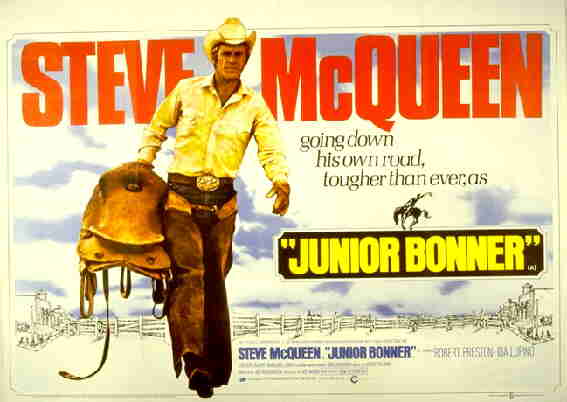
Just saw this recently, but I watched this scene about three times. After the year's biggest rodeo, its particpants and fans gather in a cowboy bar and Steve McQueen's title character dances with his nemesis' girl just a little too long, leading to an extroardinary bar fight. There have been hundreds of bar fights filmed, but none like this.
Legendary director Sam Peckinpah was able to convey through punches and thrown chairs the visceral emotions of the fight: it starts off angry, progresses to good-natured and ends exuding an air of sexual glee. These cowboys are so badass that in the right circumstances, a punch to the face from a stranger isn't that bad, hell it's actually a lot of fun. By the end of the brawl, McQueen had slithered away into a phone book with the girl, leaving everyone else to punch and clothes-line each other with smiles on their faces before the house band successfully breaks it up by starting into a country version of the Star Spangled Banner. Peckinpah's best action scenes were shot in his trademark not-so-slo-mo, but he wisely left the bar fight in real time.
Monday, September 26, 2005
My Own Private Drive-In
So on Friday night, the Mrs. and I got to catch a double feature of Wedding Crashers and The 40-Year-Old Virgin at our local kick-ass drive-in theater, the Parma Motor-Vu. The Motor-Vu was recently featured in an Entertainment Weekly article on the country's best drive-ins. Situated between some onion fields, the Motor-Vu has been showing movies to customers in their cars for more than 50 years. Not only is it beautiful setting for a drive-in (nothing but farm scenery all around it), but it also serves up a pretty good hot dog to those of us who are brave enough to stay for the double feature.
Pairing 'Wedding Crashers' and 'The 40-Year-Old Virgin" seemed like the perfect double feature for me, both movies were mildly disappointing (each losing most of their steam for the final reel). But I still had a great time, simply because there are precious few opportunities to see double features. So I'm turning this column into an If I Ran the Zoo fantasy of sorts, except substitute drive-in for zoo. Here are some of the double features that would run at Frank Burton's Drive-In:
The Night of the Hunter/Cape Fear
This would be a dream double feature for me. In The Night of the Hunter, one of my all-time favorite movies, you have Robert Mitchum playing one of the truly most terrifying characters of all-time. In Cape Fear, Mitchum plays a similarly evil and horrifying character. In both movies, Mitchum plays crazed men bent on getting what they want. But both characters still manage to be appealing to most people, which is why they are so damn evil: they are able to come off as good people, except to those who know what they want. Mitchum is maybe the only actor who could accurately portray these complex madmen, and his sly smile and stern eyes are on display in spades in these two movies, which are best seen in succession.
Halloween/Halloween II


As far as sequels go, Halloween II is pretty average, but its entertainment value goes through the roof when viewed right after Halloween, since it picks up just minutes after the original movie ends. It's rare to have a sequel literally continue what was happening in the original movie, but that's the case here and this would obviously make a great double feature to show on Halloween. The famous ending of 'Halloween' has Dr. Sam Loomis shooting his deranged former patient Michael Meyers and watching him fall off the balcony. But much to their dismay, and the audience's fright, when the characters look down from the balcony, Michael is nowhere to be found. The sequel picks up right at that moment and depicts the following chase to corral Michael.
A Boy and His Dog/The Road Warrior
Two fantastic post-apocalyptic flicks featuring the friendship between a man and his dog. The aptly titled A Boy and His Dog gives us a too young Don Johnson and his psychic dog Blood, who helps his master find what every guy in the future wants: sex. The budget is microscopic, the action bland and the movie maybe too short, but the exchanges between man and dog are hilarious, especially the ending. Director George Miller claims that 'Dog' was not an inspiration for The Road Warrior, but the similarities are there: A lonely drifter in a post-apocalyptic future, searching with his dog for the one thing he needs: gasoline. Dog (that's his name) doesn't talk in this one, but really neither does Gibson. This would make a great late-summer sci-fi double feature.
One Crazy Summer/Better Off Dead
This is a pretty obvious choice for me, as both of these are of the John Cusack Screwball 80s Comedy genre, and are very similar. One Crazy Summer gives us a loser Cusack who has some cooky friends trying to protect the world from corporate greed by beating some stuffy jocks at a yacht races. It features one of the best 80s Let's-Make-It-Work! montages as the gang restores an old junker boat. It also has Jeremy Piven, Joe Flaherty, Curtis Armstrong and even Bobcat Goldthwait for good measure. Better Off Dead has a loser Cusack who has a cooky family and will try to win a girl's heart by beating a stuffy jock in a skiing race. This one also has Armstrong, playing pretty much the same character. These would go great together just to show how similar so many 80s comedies were, and why we loved them for that reason.
Tuesday, September 20, 2005
'What's My Name?'
This 1967 ice cold revenge flick starring Lee Marvin, Dean Wormer and even Carrol O'Connor really caught me by surprise. Watched it last night and it hit me like one of the many pistol whips dished out by Marvin. Point Blank is a brutal, barbaric and wildly entertaining tale of revenge with camera and editing work decades ahead of its time. If you thought Marvin's trademark movie was The Dirty Dozen (which also came out in '67, damn that was a good year for ol' Lee), then you'll be knocked on your ass from 'Point Blank' just as I was.

At its core, 'Point Blank' is a tale of the meanest sonofabitch criminal out to get the money that was stolen from him by a huge criminal syndicate. But thanks to the work of Marvin, some of the best editing of its era and a bold undercurrent to the story from director John Boorman, ‘Point Blank’ is a timeless classic It's not that they don't make 'em like 'Point Blank' any more, in fact they do (The Limey could be considered a modern re-telling and Mel Gibson's Payback was a straight-up, halfway decent remake), it's just that even with all the brutal violence and political incorrectness, 'Point Blank' contains a subtel secondary plot that would be too tempting for today's filmmakers to center the whole movie around.
Okay, I've alluded to this secondary plot twice now, but I'll hold off on explaining it until later, okay?

'Point Blank' finds Marvin's character 'Walker' in one of his many flashbacks to a robbery gone wrong on Alcatraz, when his partner Mal Reese stole his share of the money, ran off with his wife and also shot him twice in the gut for good measure. Walker was left for dead on The Rock, but somehow survived, and now he's back to get what's his, namely the $93,000 owed him and just maybe the lives of everyone who stands in his way.
Driven by a mysterious man named Yost who would also like to see a few choice middlemen in the syndicate taken down, Walker heads to Los Angeles for answers. Marvin masters the role of Walker, making his every movement and word as robotic as his emotionless violence. The best example of this is when he goes to his wife Lynne's house, where she is living with Reese. He throws open the door, covers her mouth, scouts out the area, and then rushes upstairs to fire four shots from his Magnum into the spot of his bed where he used to sleep, the spot that Reese has taken.
But Lynne is of no use to Walker, so he grabs her sister Chris and uses her beauty to infiltrate the syndicate and get closer to the men who have his money. Walker shakes 'em down, and when they can't help him, say goodbye. The way that Walker kills his way up the criminal corporate ladder is almost video game-like, with each department head acting as a boss at the end of a level. There's a great performance by Lloyd Bochner ('Twilight Zone' fans will instantly recognize him as the lead character from To Serve Man), who is tricked by Walker into walking into his own deadly trap. The idea of corporate runaround ('I can't get you your money!') was probably a new concept in 1967, but of course it's a much-parodied subject now, making 'Point Blank' all the more relavent now.
Throughout Walker's emotionless violence is his twisted relationship with Chris, who he still has some use for. Even though he is incapable of expressing any passion, he sees her as a way to get back at his wife and maybe an outlet of rare enjoyment. But whenever he gets close to her, all he can see are his enemies who slept with her as well. For Chris, being with Walker tears her apart since he somehow convinced her to sleep with a man she despises so Walker could slip past his guards, but he offers her the only protection from the criminals out to get her. This relationship is illustrated beautifully in a scene where Chris is so frustrated she starts hitting Walker as hard and as fast as she can. As Chris flails on Walker, he stands there not even blinking, taking every hit until she collapses from exhaustion.
When Walker works his way to the top of the syndicate, he finds himself at a familiar location to get his money: Alcatraz. But when the money is there and Yost reveals his agenda, Walker seems to disappear into the shadows of the place where he probably should have died. Although there is no spoken lines that would allude to Walker being a ghost of some kind (thankfully), the cryptic ending gives it some credence, as does the original Alcatraz scene where he takes two shots at point blank (I knew I would end up typing that!) range.
It's an elite revenge movie made timeless by Marvin's acting and presented with revolutionary jump cut flashbacks that would not become commonplace for another decade. Do yourself a favor and pick up 'Point Blank.'
Sunday, September 18, 2005
Overrated Horror Movie No. 19
'Sleepaway Camp'
I like horror movies as much as the next guy, maybe not as much as the guy next to him wearing the Japanese 'Evil Dead' shirt, but, yes, I like 'em. However, I have been frequently snake bitten by the overrated horror bug. These films are usually not known by most mainstream moviegoers, but have received considerable acclaim by the guy you don't know who sits next to you at 'Revenge of the Sith,' or your the guy in your dorm who organizes 'Friday the 13th' marathons and ends up being the only one watching them. They point to these movies as one of their all-time favorites and are shocked that you have not seen them. More often than not, these horror flicks prove to be slightly more entertaining than the good episodes of 'Saved by the Bell: The College Years.'
The most egregious example of this is Last House on the Left, a movie so disappointing and unworthy of any praise that I cannot even go into detail about it in this sentence (it deserves a post unto itself), but the most recent offender is Sleepaway Camp, which I had the displeasure of seeing last night. Hailed by its legions of fans as one of the camper slasher genre's best, and lauded by even more for its 'surprise' ending, 'Camp' apparently has enough interest in it to warrant the Sleepaway Camp Survival Kit, a boxed set that includes all three movies and even a Sleepaway Camp Diary!

The following words in this post will contain massive spoilers about 'Sleepaway Camp,' and I have no regret doing so because I feel that this is a public service message so that no other unfortunate souls will voluntarily waste 90 minutes of their life watching this mess.
So if you actually want to wade through the first putrid 89 minutes and truly be 'surprised' by the ending, do not read beyond this line.

More 'accidents' like this occur, usually after someone slights our lovely Angela. A boy is drowned, another boy is stung to death by bees while locked in a bathroom stall. Meanwhile, Angela is still not talking, until a friendly boy starts paying attention to her. They hold hands and kiss, but when the boyfriend wants any more action, the party's over (he'll find out why soon enough). As campers and counselors are killed off, we have people saying "oh it's just you" or "what do you want?" when the killer approaches them, building up suspense for the unmasking of the murderer.
It's completely obvious to anyone watching that the killer is Angela, and here's the twist:
Ready?
You sure?
Here goes:
Angela is . . . A BOY!!
Yep, that's it. Seems that in the water skiing accident, angela somehow had her scalp torn off or something, so when she went to live with her aunt, she made him into a her. This is hardly a surprise either, since she doesn't want to be touched and doesn't shower with the other girls. But what makes this yawn-inducing 'surprise' ending even worse is how it is presented:
We see Angela stroking the face of her boyfriend, counselors run to her, we see that the boyfriend is just a head, and Angela stands up, naked, with blood covering his/her chest and starts making noises akin to a slighted mother bear. Close up, fade to credits.
Okay, so she's a boy, but unlike any good movie with a surprise ending, this doesn't change anything with the rest of the movie. All this explains is why Angela wouldn't let her boyfriend touch her, and I guess why she felt the need to kill everyone. The rest of the movie is completely forgettable as there is no suspense, humor or any remarkable characters.
So now you're probably wondering how they could make a sequel (two sequels!) to this trash. Well, Sleepaway Camp II: Unhappy Campers, puts Bruce Springsteen's little sister (no joke) in the role of Angela, and is largely known for having one of the worst posters imaginable (Ha! Look she's going back to camp and is taking Jason's mask, Freddie's glove and a chainsaw!) Sleepaway Camp III: Teenage Wasteland gives us more Pamela Springsteen, this time at an inner city camp, looking for more blood. The boxed set even includes footage from the fourth installment, 'The Survivor,' which was never finished. Gee, how could that have happened?
Friday, September 16, 2005
Comparing the Incomparable:
Jean-Claude Van Damme vs. Steven Seagal
Their careers are essentially dead, today's generation has little idea who they are, and you won't likely see any 'Special' or 'Collector's Editions' of any of their movies in the immediate future. So why do we care? Well, both Jean-Claude Van Damme and Steven Seagal began their careers at relatively the same time (1988-89) and the prime of their careers spanned the same amount of movies (11). Unfortunately, neither appeared on the screen together, but today we're pitting their respective careers against each other to find out who was the better white kung fu action star of the last two decades.
To accomplish this, we will look at how many bonafide quality movies each made in their career, how each actor's best movie stacks up against the other, as well as their legacy today. It guarantees to be a wild (though unconsequential) ride, so fasten your silk kimonos and tie back your curled mullet. But first, a primer on both of our contenstants:
Jean-Claude Van Damme
Born in Belgium as Jean-Claude Camille François Van Varenberg (thanks mom and dad!), Van Damme fought his way up the European kickboxing circuit before trying his hand at Hollywood, where he was helped along by Chuck Norris. In the mid 80s, he started work on what would later be 'Bloodsport,' but due to waning interest from the studio, it wouldn't be until 1988 when it was finally released, boldly marking Van Damme's entrance to the thriving late 80s beat-em-up genre. His sophomore effort, the who-cares sci-fi slop 'Cyborg,' was forgettable, but Van Damme unleashed a fury of hits in the next two and a half years with 'Kickboxer,' 'Lionheart,' 'Death Warrant,' 'Double Impact' and 'Universal Soldier.'
Van Damme combined with legendary action director John Woo to make his best movie, then underrated 'Hard Target' of 1993, and had a minor hit the following year with 'Time Cop,' but it was clear then that interest in Van Damme was falling at the box office. His last real theatrical release, 'Sudden Death,' bombed with audiences and marked the end of his career as a first-run actor.
Van Damme's movies typically featured him as a down-on-his-luck jeans-wearing gentle guy with one hell of a mean streak. His fighting style favored power kicks over speed, and he generally stayed away from guns until his later years.
Steven Seagal
Not much is known about the real background of Seagal. A Vanity Fair article a few years ago revealed that he may have lied about having a CIA background (a common practice because the agency does not confirm nor deny the employment of former agents) to further his career as an elite fighting instructor. What is known is that Seagal spent many years honing his craft (primarily aikido) before he was spotted by a Hollywood producer. His debut 'Above the Law' was an instant hit and followed by the popular 'Hard to Kill' and 'Marked for Death,' which both came out in 1990. 'Hard to Kill' is still criminally underrated and is regarded by many Seagal fans as his best movie and one of the best beat-em-up movies of the decade.
In his first three films, Seagal demonstrated his unique aikido style, which relied on transforming the moves of his opponent into crippling blows. The most famous example of this is in 'Hard to Kill,' when he snaps a villain's arm by bending it over his other arm in one fluid motion. But it was Seagal's next film that would be his biggest hit. 1992's 'Under Siege' was a true blockbuster and one of the best action movies of its era. Adding more weapons play and some end-of-the-world danger, along with his playful sidekick (former Playboy Playmate Erika Eleniak, who enjoyed a semi-career after 'Under Siege') made for quite a successful combination. But he would never come close to matching the success of 'Under Siege,' as his subsequent movies (even 'Under Siege 2') were all worse than their predecessors.
Body of Work
Seagal undoubtedly had the biggest hit, but it could be argued that Van Damme had a more consistent career, with seven quality movies, compared to Seagal's five (he gets marked down for 'On Deadly Ground,' his post 'Under Siege 2' movies and his role in 'Executive Decision' was too small to count). Van Damme's 'Double Impact,' 'Nowhere to Run' and 'Cyborg' don't make the cut, but 'Lionheart' and 'Death Warrant' just sneak in due to how well they were received at the time.
Edge: Van Damme
Best of the Best
This is a tough one for Van Damme to win, as his best work 'Hard Target' isn't as well known or did as well at the box office as 'Under Siege.' While Van Damme benefitted from Woo's expert lens and casting (where have you gone, Lance Henrickson?), Seagal had a great suspenseful story and a perfect villain in Tommy Lee Jones. 'Hard Target' has the murky shadows of New Orleans and the mysterious bayou, but 'Under Siege' has a battleship overrun with terrorists and even a submarine. In the end, this is a battle Van Damme cannot win, even with his trademark roundhouse kick.
Edge: Seagal
Legacy
It all comes down to this, and the hardest category to decide to boot. So how has life treated our action stars since their careers have ended? Well, Van Damme has been in and out of cocaine rehab and Seagal has been reduced to a pudgier version of himself, still trying to make it as an action star. Since they both have fallen on hard times, let's look at how their movies will remembered. As I see it, Van Damme's good looks will be outweighed by Seagal's more entertaining fighting style, which looks good on film and is sure to be more cherished than Van Damme's high kicks. Also, not having an accent helps his cause. Sorry, Jean-Claude Camille François Van Varenberg.
Edge: Seagal.
Epilogue
It was a time that may never be repeated in Hollywood for those lucky enough to live through it. Seagal and Van Damme may not have made that many (or good) movies, but did provide a generation of adolescent boys a glimmer of hope that, yes, white guys can indeed kick ass.


Tuesday, September 13, 2005
Third Time is NOT the Charm
Watching 'Omen III: The Final Conflict' for the first time last night, I was reminded once again that movies with 'Part 3' or 'III' following their titles are best avoided. I'm not saying that sequels are usually bad, because there are many instances ('The Road Warrior,' 'The Empire Strikes Back,' 'Spiderman 2,' 'Aliens,' etc.) where the second installment manages to trump the original (although a significant argument could be made for 'Alien,' since the big budget James Cameron sequel was not a horror movie like the original was). But films almost universally fall flat when trying for three. And without delving into 'Part IV' and '5' sequels, since it is accepted that they will be bad, let's take a look at my list of favorite bad Part III's:
'Omen III: The Final Conflict'
As I stated above, I just saw this last night and was very disappointed. Being a big fan of 'The Omen' and having mixed thoughts on the second one, I had mild expectations for 'III.' But this movie really has nothing going for it, starting with its horrible decision to flamboyantly change the 'rules' implemented in 'The Omen.' In the original, Gregory Peck was told that to completely kill his demon child, he needed to use all seven of the special daggers and even spear them in a certain order. But in 'III' we are told that just one stab from a dagger will kill Damien, giving the director a chance to show many different, and stupid, failed attempts on Damien's life (seriously, if you're going to corner Damien on a bridge while he's surrounded by a bunch of dogs, you're asking for trouble. Me? I would just follow him into a bathroom and stab him at the urinal.)
In 'III' we meet a grown-up Damien who is positioning himself to be America's ambassador to the United Kingdom so he can kill the second-coming of Christ and eventually become president. There are again many silly deaths caused by his satanic powers, with the worst being the suicide by Damien's predecessor in the U.K. After being hypnotized by a dog, he goes to his office, calls a press conference, then takes the ribbon out of his typewriter, wraps it around the doorknobs to a pistol pointing at him at his desk so when the reporters come through the door, they will blow his head off. So did he think this up on his own or did the dog give him all the instructions? Had the dog tried this before? Would it really work? I better find out before I type anything more about this awful movie.
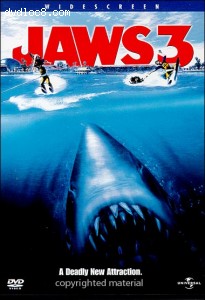
Jaws III
Simply one of the worst movies ever made. I can't imagine how Steven Spielberg must have felt watching his masterpiece reduced to D-grade slop in just a few years. While the second 'Jaws' was almost passable as entertainment, 'Jaws III' is impossible to witness without wincing at the Community College-quality blue screen work and the ulcer-inducing finale: the second shark (yes, there are two in this one, the first one was just a baby!) 'eats' a scuba diver holding an underwater explosive, but somehow forgot to swallow him, so his relatively unharmed body is still in the shark's mouth. This sets the stage for Dennis Quaid's character trying to reach inside the shark's mouth to pull the pin on the bomb held by a dead scuba diver, which results in the most poorly staged explosion ever witnessed: one frame the shark is there, the next frame there is a cloud of blood, wow!
Mad Max Beyond Thunderdome
Yes, I know there are some who enjoy this atrocity, but I despise this unworthy finale to a great series. In 'Mad Max' and 'The Road Warrior' there are spectacular car chases and stunts, but in 'Beyond Thunderdome' our hero drives . . . a team of camels. Cool. The plot revolves around getting a smart midget to a city where he can turn the lights on by refining pig shit, and there's something about a society of children who think Max is their savior. It really matter though because it's not entertaining, it's too long and it's not Mad Max.
Ugh, that's all for now, thinking about all the pig shit puns in 'Beyond Thunderdome' put me in a bad mood.


Friday, September 09, 2005
Did that really happen?
'Gremlins 2'
It's a strange emotion when you watch a movie about 10 years after you first saw it and realize: 1. It's one of the worst movies you've ever seen, 2. You actually liked it the first time through.
This was the case with me seeing 'Gremlins 2' last night on HBO. I vividly remember seeing it in theaters the first weekend it was released, and my brother and I both enjoyed it. But seeing it now, I can't help but think 'Gremlins 2' has aged worse than almost any movie I've seen. Before you disagree with me, let me remind you of one scene in particular:
In a series of scenes designed to show the audience just how crazy and out of control these gremlins are, the 'movie' you're watching 'stops' because there are gremlins in the projection booth. The film burns away and we see gremlins doing shadow puppets on the screen. The next shot is of a woman and her child coming out of the theater and complaining to the manager of the problem, and we then see the projectionist who quits because of the gremlins, who 'only want to see Snow White.' It's the next part that almost made me vomit: The manager goes into the theater and finds none other than Hulk Hogan, who yells at the gremlins to put the movie back on.
What?
Yes, this scene actually exists. The Hulk Hogan Scene epitomizes how unwatchable 'Gremlins 2' is compared to the original. 'Gremlins' had some slapstick in it, but was also actually pretty damn scary in a few scenes. In 'Gremlins 2,' director Joe Dante seems intent on filming every possible pop culture gag he can, even if the plot may occasionally get in the way. The best example of this is near the end when the characters are trying to figure out a way to kill the gremlins, it's played tense by Dante, but then he randomly switches to a Gremlins Phantom of the Opera scene, which quickly ends and puts us back into the plot. Huh?
'Gremlins 2' is another example of how the 'Yeah We Know It's a Movie' convention does not work. There are a few instances where characters acknowledge the existence of the original 'Gremlins' movie. One in particular is a shot of Leonard Maltin reviewing 'Gremlins' only to be attacked by the creatures. Oh, so the movie 'Gremlins' exists in the 'Gremlins 2' world? Did you happen to notice that the main characters in 'Gremlins' are actually real and work for the cable network that is broadcasting a review of 'Gremlins'?
There are a few saving graces (okay, two):
--Since this is Joe Dante, that means Dick Miller is in the film as well, and he's his usual awesome self.
--The puppetry on the 'brain' gremlin is fantastic and actually better than some CGI mouth work (George Lucas, take note). I forgot about this character (voiced by Tony Randall), it's probably the best part of the movie.


Monday, September 05, 2005
The Failed Movies: 'Gone in 60 Seconds'
On paper, it all sounded so promising: A remake of a movie few have seen but some have heard about, known more for its chase finale than anything that happens before it. Add an all-star popcorn cast (Nic Cage, Angelina Jolie, etc.) and a similarly star-studded automobile lineup. Sounds great, right? I was so disappointed in 'Gone' that it began to entertain me at how it topped its ineptness with almost every scene.
BLOCKBUSTER EMPLOYEE: Wait, Frank: Didn't alot of people like this movie? Shit, didn't a new Director's Cut DVD of 'Gone' recently come out?
The worst part about (and it has a lot of contenders) is how it squandered all the potential it had, because it did look very good on paper. This is why 'Gone' falls in the 'failed' portion of DVD Panache, because there are many many bad movies, but fewer that can truly be labeled as 'failures.' The main plot failure for 'Gone' is that throughout the supposed grandiose car heist, there is zero suspense, because the cops' plan is to wait until they have stolen all the cars and THEN nab Cage and friends.
Yet the film spends so much time showing the myriad of car heists and trying to act like they're dodging all sorts of trouble, when every viewer knows that there is no way they will get caught until the very end, supposedly setting up an epic finale. This means the film is devoid of any conflict (which I thought was a central plot point for any film) until the last 15 or so minutes. Of course to create genuine emotions of suspense during all the car heists, the people behind the camera would actually have to work, which they clearly weren't interested in (this is especially evident during the final chase, more on that later).
Another failing for 'Gone' is how inept it is when dealing with the very cars they lured their audience with. The producers obviously wanted to cater to the car crowd (which included myself), but we see so very little of the hundreds of cars, it's almost not worth it. Most of the exotic cars are seen simply entering a warehouse or just leaving a curb -- WOW! If you're going to make a car movie, at least give us some worthwhile scene.
But the most memorable failing for 'Gone' has to be the final chase, which manages to be boring and maddening at the same time. I could bore you an equal amount by going on about how Eleanor is obviously a replica and does not excite any true car lovers, but I wouldn't do that to you.
The chase itself has a whole slew of missed opportunities. John Frankenheimer still holds the title for the best modern chase scenes with his memorable tire squealers in 'Ronin.' How did he do it? He made them real and didn't use cheap camera tricks like 'Gone' does, using quick cuts many interior car shots, never really giving the viewer a good look at what is really going on.
Finally, the most well-known shot in the original 'Gone' was Eleanor's magnificent jump to end the chase, which is seen by multiple angles and camera speeds. The beauty of this shot is that it looks so realistic, because of course it actually happened. There is no such beauty in the final jump of the new chase scene, because it is a CGI scene. What? You're actually going to use CGI for a damn car jump? Last I checked, there have been maybe hundreds of movies throughout the decades that have successfully filmed car jumps, and they never had to use CGI. Luckily for the lazy people behind 'Gone,' CGI was available, and they didn't have to work very hard on their big 'stunt.' Instead, we get a very cheesy effect that is clearly fake and explicitly unamusing. This uninspired effect actually made me laugh out loud in the theater because it was the perfect ending: the biggest missed opportunity of all to a movie that failed on all its potential.


Friday, September 02, 2005
From New Orleans to Vienna
Watching the terrible visuals of the devastation wrought by Hurricane Katrina, I was reminded of one of my favorite movies. One that tells the tale of a ravaged city, with its inhabitants trying their best to remain human despite the fact that the surroundings they once knew are now largely destroyed.
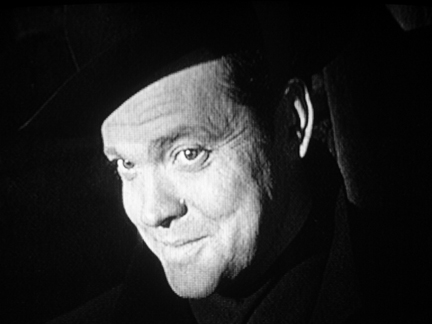
I am speaking of 'The Third Man,' which I believe is one the ten best films ever made. Carol Reed's movie opens with shots of post-war Vienna, once a posh, striking city, reduced now to crumbling buildings, decaying culture and interlocked in international politics. The same could be said for New Orleans, certainly one of the most distinctive cities in the nation, but one that will probably never be looked at in the same way.
In Reed's version of Vienna, in between the ruins of bombings are people who are trying as best they can to do the things they did before the war, so that even for a moment their minds can be taken off the depressing sights around them. Almost every character in 'The Third Man' is guilty of these actions, beginning with Maj. Calloway, who Joseph Cotten's character Holly Martins meets in one of the first scenes. Calloway is obviously a defeated man, whose job of enforcing laws in one fraction of a largely lawless city is fruitless, giving him little motivation. But chasing criminals such as Harry Lime (Orson Welles) is one of the few things he has left that still make him feel like someone.
Then there is Dr. Winkel, the professor who invites Martins to speak on his books for an educational series of his. Programs like Winkel's serve as a brief respite for the residents of Vienna trying to make sense of the horrors around them.
And of course the film's most famous set piece, the Ferris Wheel serves in this capacity too. In that scene, Martins and Lime are among the few visitors to a carnival area untouched by the bombings. The carnival is still operating and the Ferris Wheel is one of the few reminders of the pre-war Vienna. Lime's timeless line after exiting the Ferris Wheel sums up post-war Europe and gives hope to those affected by the hurricane, as adversity can bring with it prosperity:
'Don't be so gloomy. After all it's not that awful. Like the fella says, in Italy for 30 years under the Borgias they had warfare, terror, murder, and bloodshed, but they produced Michelangelo, Leonardo da Vinci, and the Renaissance. In Switzerland they had brotherly love - they had 500 years of democracy and peace, and what did that produce? The cuckoo clock. So long Holly.'
Tuesday, August 30, 2005
Left Behind: 'Grand Prix'
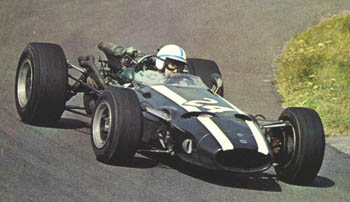
There are a number of great movies that have been 'left behind' in the digital revolution. While some of these movies may actually be available on DVD, many have not received the kind of treatment they deserve. One of the best examples of this is 1966's 'Grand Prix.'
Directed by John Frankenheimer, who at that time was best known for the magnificent but controversial 'The Manchurian Candidate,' the American director wanted to put his love of open-wheel racing on the big screen. A film like this would not fly today, but in the late 1960s, the sport of open-wheel racing was perhaps at its peak in America. Much of this fascination was with the exotic nature of the international series of Formula 1, which raced all around the world and created superstars akin to the NASCAR drivers of today.
Frankenheimer would take his cameras where no one had ever been before, literally on the extremes of the 180 mph spartan racers. Toting a cache of Super Panavision 70mm cameras, Frankenheimer would film from all sides of Formula 1 cars as they sped around hairpin curves. James Garner provided star quality, but the real headliners were the speed machines themselves, as well as their high profile drivers.
Because of the way it was filmed, 'Grand Prix' would be an amazing DVD. The use of Super Panavision cameras mean Frankenheimer's film defines 'widescreen' and his liberal use of split screen techniques puts the viewer right in the middle of the tension-filled races. I can't imagine how amazing this movie would look if it was remastered, or if it was viewed on an appropriately widescreened monitor. At the same time, the sexy sounds of wide open F1 throttles would assault your senses if mastered in Dolby Digital or DTS.
I've read that MGM's explanation to 'Grand Prix' not being on DVD is that there is not enough interest to make it feasible. But 'Grand Prix' has driven under the radar for a decade without much buzz, so it's not fair to fault it for that. If anything, today's increased interest in racing should help spur a new DVD release that, if properly handled, could entice a new generation of racing fans.

From the DVD Panache Library: 'Ed Wood'
One of my recent dips into The DVD Panache Library produced 'Ed Wood,' which I had recently picked up after nearly two years of delays from the studios. Won't you join me in a look at one of the more underappreciated works of the 90s? Please?
Watching 'Ed Wood,' it still amazes me that this movie was even made. Even though it had a great cast and a popular director, it was virtually guaranteed to do poorly at the box office since it was made in black and white about a person few knew anything about. But because of this, 'Ed Wood' will age gracefully thanks to Tim Burton's storytelling ability and one of Johnny Depp's best roles.
'Ed Wood' is of course a biopic of the title character, who gained fame posthumously as the alleged worst director of all time. Burton's lense shows the viewer that although his films lacked proper budgets, and arguably quality, Wood was a tireless worker who went to great lengths to see his visions on the screen.
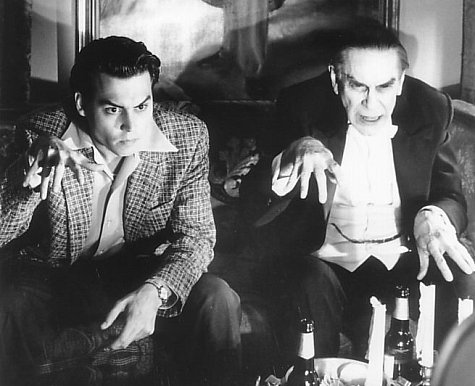
Being shot in black and white gives 'Ed Wood' an advantage over other period biopics, giving it an air of authenticity and making its characters into near carbon copies of their real-life counterparts (Martin Landau's Bela Lugosi especially). The black and white direction to me acts like another character in the film, showing the old days of Hollywood and what gutter budget directors like Wood could get away with.
Even though Burton's film pays particular attention to his character's vices (Lugosi's morphine addiction, Wood's crossdressing), it never seems like he is trying to tear them down. Rather it creates sympathy in Lugosi's case and gives a window into how eclectic and brave Wood really was.
Burton made the smart decision of focusing his film on a key period in Wood's life, specifically the director's entry into Hollywood and the production behind a few of his most well-known, and reviled, films. In Depp, Burton found an actor more than capable of displaying Wood's unshakable confidence and his giddiness behind (and in front of) the camera. Depp said he based part of his character on Ronald Reagan, and it's easy to see, as Wood seems to roll every avalanche of bad news off his back with another smile.
But 'Ed Wood' is at its best when Burton pokes fun at the title character and the Z-budget movie industry as a whole. The best example of this is during the filming of 'The Atomic Bride' when Wood films two successive scenes of characters essentially just passing through a hallway for no reason ('He really wants to get through that door!') before the studio boss comes to inform Wood that another one of his checks bounced. Or during the octopus scene when Wood responds to a question with 'I've got 25 scenes to film tonight!'
The long-awaited DVD of 'Ed Wood' features an entertaining ensemble commentary which reveals that the decision to film in B&W came well into pre-production. Also included is a semi-entertaining collection of behind the scenes footage as well as an interesting look at the theremin, the unique instrument used to make most of the score.

Sunday, August 28, 2005
Lazy Sunday 80s Matinee: Howard the Duck
You remember those days, right? Sundays in the spring or summer well before digital cable, when a kid was forced to flip through the channels and find an oasis of entertainment between the dregs of tennis, church shows and 'Gimme a Break' reruns? For me, there are certain movies from the 80s that instantly zip me back to that time, one of which is 'Howard the Duck.' HBO was notorious in the late-80s (even moreso than it is now) for repeating certain movies at a bewildering pace. They weren't even necessarily good movies, either (the wonderfully bad 'Solar Babies' was a gold member of this club).
So this brings us to 'Howard the Duck,' which is becoming one of those movies that, when shown to one of today's teens, would elicit a 'what the hell?' look not seen since I walked out on 'Waking Life.' Watching it now, it's fun to imagine just what was going through George Lucas' mind with this project when describing it to his semi-friend Steven Spielberg:
Lucas: 'So Steve, "Indiana Jones and the Temple of Doom" was pretty good, but my next project is even more daring'
Spielberg: 'More daring than a PG-13 movie where someone's heart gets ripped out and turns to flames before said heartless man is incinerated? Do tell.'
L: 'It's called "Howard the Duck," and it's going to blow audiences away with its hero's attitude and an infusion of rock 'n roll and sci-fi monsters.'
S: 'Sounds like a hit, but didn't you say it has "Duck" in the title?'
L: 'Ya, it's based on a comic book.'
S: 'I've never heard of it, do the kids read it?'
L: 'Highly unlikely, it's not very popular at all.'
S: 'But you're making a movie about it?'
L: 'Oh ya, and get this: the Duck, you know, Howard? He's so crass and in-your-face that he smokes cigars!'
S: 'I don't know Georgie, any stars in it?'
L: Well I've got Maggie McFly from "Back to the Future" and the principal from "Ferris Bueller's Day Off!" You'll love his part, in this one scene, a snake comes out of his mouth to suck the electricity out of a car's cigarette lighter!'
Okay, I better stop here, this could go on way too long. Looking at the poster above, doesn't it make perfect sense that it came out on August 1 in 1986? I mean this is the quintessential late-summer movie. I guessed I've bashed 'Howard' enough, because there were some good parts of this movie that made me watch it numerous times on HBO:
-- Jeffrey Jones: God I love this guy, if I was a director I would use him like Joe Dante uses Dick Miller. He's so great at playing Demented/Crazy Guy #2, and 'Howard' is no exception.
-- Better-than-usual 80s sci-fi effects: This is where Lucas' touch really shows, as the monster effects still hold up pretty well, and the snake coming out of Jones' mouth even looks good.
-- The Duck-isms: Lucas milked the duck element about as much as he could. Oh, look! He's reading Playduck! And he's sad that he doesn't fit in because he's the only duck walking around Los Angeles smoking a cigar!
-- The laser gun finale: This was always my favorite scene, when Howard finds a big laser gun in a closet at the lab (they're always lying around somewhere) and blasts the monsters from whence they came. Of course since this is a Lucas flick, this scene would not be complete without a Tarzan reference (i.e. Ewoks in 'Return of the Jedi,' Wookies in 'Episode III')
--The musical finale: Yes, Howard is onstage with Beverly. Her band managed to compose a song about him amazingly called 'Howard the Duck' and the credits roll. Beautiful.


Saturday, August 27, 2005
My 10 Favorite DVD Commentaries
I remember when I got my first-ever DVD ('Ronin,' way back in 1999), the first thing I wanted to do was listen to John Frankenheimer's commentary on the disc. It was a feature I had read about when the digital format was being developed and it has remained one of the most popular special features on a DVD. Below are 10 of my favorite commentaries:
10. Peter Bagdonavich ('Citizen Kane')
'Kane' has two excellent commentaries, including one from director Peter Bagdonavich. It is never fully explained by Peter how he came to know Orson Welles as well as it seems he did from the anecdotes he gives, but his incite on the director and his movie are excellently candid. Bagdonavich's laid back approach includes some rare criticism of 'Kane,' adding that it's not even his favorite film by Welles.
9. John McTiernan ('Predator')
The tone for director McTiernan's commentary on 'Predator' is set in the opening minutes when he admits, in a voice that can best be described as a hungover Jeff Lebowski: "It's been a LONG time since I've seen this movie!" Although McTiernan seems less-than-enthusiastic about giving a commentary on his film, he gives some great insight, including how he dealt with the Mexican crew on the set and how the infamous gatling gun worked (it was hooked up to numerous batteries and could be barely be lifted).
8. Wes Anderson and Noah Baumbach ('The Life Aquatic')
Like his movies, Wes Anderson's commentary track on 'Aquatic' is far from ordinary. He and co-writer Noah Baumbach recorded the commentary at the very restaurant where the two conceived of the film. Throughout the track, you can hear the hustle and bustle of the eatery in the background which adds to the how simple Anderson and Baumbach make the filmmaking process sound.
7. John Carpenter and Kurt Russel ('Big Trouble in Little China')
Just like Carpenter always comes off as an everyman director, Russel just seems like he can be your neighbor. The result is a very genuine conversation/commentary between the two friends with Carpenter explaining his trademark framing techniques and Russel pointing out how fun it was to do the various stunts. Carpenter also drops this bomb of geek info on you: 'Big Trouble' was originally intended as a straight-up Western, now how cool would that have been?
6. Richard Kelly and Jake Gyllenhall ('Donnie Darko')
Since Kelly was a 26-year-old first-time director with 'DD,' he brings a very honest and youthful tone to the commentary, with Gyllenhall acting like his junior high buddy who busts his chops at every opportunity. Kelly reveals where the grotesquely creative visions for 'DD' came from and little tidbits of filmmaking goodness here and there (like the ghastly sum that The Pet Shop Boys wanted for the right to include 'West End Girls' as the dance team's song)
5. Tim Burton and Paul Reubens ('PeeWee's Big Adventure')
What a coup it was for PeeWee fans when Reubens signed up for this commentary. Burton and Reubens have a lively look back at the production of 'PeeWee,' which the latter was involved in maybe more than you thought. Reubens reveals that the bicycle plot came was inspired by Warner Bros. giving the comedian a nifty bike to ride around their studios during pre-production. Also, most of the odd toys in PeeWee's bedroom actually belonged to Reubens.
4. Michael Mann ('Heat')
The main reason I double dipped on 'Heat' was to hear Mann's take on his masterpiece. Not only does Mann talk about working on the set with Pacino and De Niro, but also how much his years of reasearch into criminal behavior added to the authentic feel of the film. Mann's commentary adds to the belief of how hard it is these days to make a sweeping crime epic like 'Heat,' they don't come around too often.
3. Roger Ebert ('Dark City')
I love it when film critics add commentaries, especially when it's someone like Ebert talking about one of my favorite movies. Ebert boldly proclaimed 'Dark City' as one of the best movies of the year and is able to add a never-dull track to its disc. Ebert gushes on and on about the strange nuances of the original plot as well as the genius natural lighting and authentic sci-fi-noir look of the movie. Ebert points out something that I never noticed: There is not a single cuss word in the entire movie.
2. Hunter S. and Anita Thompson ('Fear and Loathing in Las Vegas')
Criterion's inclusion of this new commentary track is perhaps the firm's best special feature to date. After Thompson's death, this commentary serves as a nearly living time capsule for fans of what kind of person Thompson was. Yes, he really was that crazy (a few times he lets out piercing wails for no reason), and yes he really was that smart (poignant analysis of the Book of Genesis as one of the greatest examples of writing). This is far from your normal commentary, as Thompson tries to call Johnny Depp and Benicio del Torro during the recording session (neither were home) and also takes questions from a University of New Orleans professor on the lasting legacy of the movie.
1. Christopher Guest, Michael McKean and Harry Shearer ('This is Spinal Tap')
Wow! For the true 'Tap' fan, this commentary is like a sequel to the funniest movie ever made. Speaking in character, the three musicians take us through their last 20 years of their career and give us their uncensored takes on the co-stars of the film, such has how Marty DeBergi lied to them and how most of the people in the film are dead now (at least they think so).